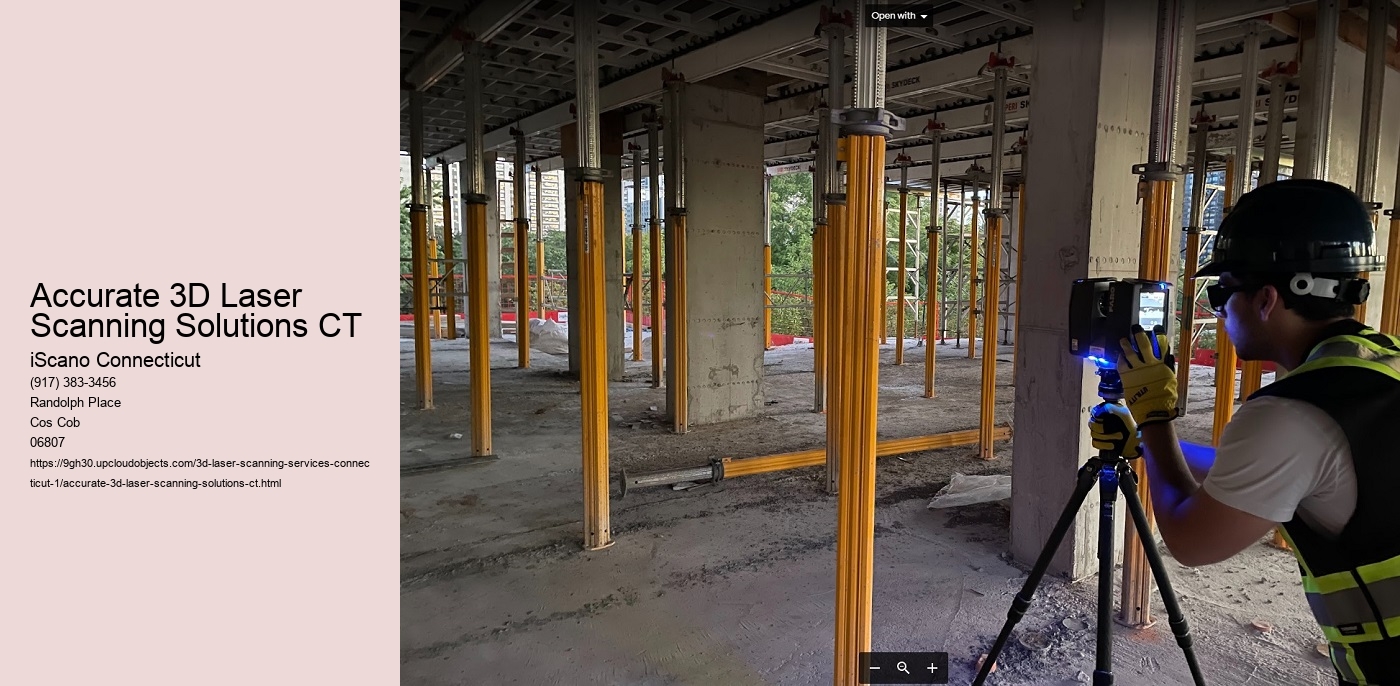
Reinventing Mapping and Surveying: 3D Laser Scanning Redefines Connecticut'' s Visual Landscape Technology in visualization has taken a huge leap ahead with the introduction of 3D laser scanning technology. Accurate 3D Laser Scanning Solutions CT . This sophisticated device is reinventing the way we perceive and communicate with our environments, specifically in the context of mapping and surveying in Connecticut. With its exceptional precision and efficiency, 3D laser scanning is reshaping markets and unlocking new opportunities for city planning, framework advancement, heritage preservation, and far more.
Connecticut, with its varied surface and abundant social heritage, provides a myriad of difficulties and possibilities for visualization innovations. Traditional methods of mapping and checking often struggle to record the complex information of its landscapes and structures. Nonetheless, 3D laser scanning supplies a solution that goes beyond these restrictions, offering highly accurate and thorough representations of both all-natural and manufactured environments.
One of the vital advantages of 3D laser scanning is its ability to record information rapidly and non-invasively. By giving off laser pulses and determining the time it considers them to return, scanners can generate specific three-dimensional versions of things and landscapes with remarkable speed. This performance is especially helpful in Connecticut, where tasks often face limited target dates and intricate surface.
Moreover, the level of information captured by 3D laser scanning is unmatched. From the complex facades of historic structures in New Haven to the rugged topography of the Litchfield Hills, every nuance is faithfully recreated in the resulting electronic versions. This degree of fidelity not only boosts the precision of mapping and checking efforts but also supplies important insights for conservation and remediation projects.
In addition to its precision and performance, 3D laser scanning offers flexibility that is unequaled by traditional methods. Whether it'' s capturing the layout of a building and construction site in Stamford or recording the condition of a bridge in Hartford, scanners can adapt to a large range of settings and applications. This flexibility makes them crucial devices for engineers, architects, excavators, and city coordinators across Connecticut.
In addition, the data gathered through 3D laser scanning can be easily integrated right into numerous software systems for further evaluation and visualization. By combining scan data with geographic details systems (GIS) or constructing information modeling (BIM) software program, stakeholders can get much deeper insights into spatial relationships, identify potential issues, and make more enlightened choices. This assimilation is driving technology in areas such as city design, transport planning, and environmental monitoring.
Past its sensible applications, 3D laser scanning is also adding to the conservation and documentation of Connecticut'' s cultural heritage. By digitally capturing historical sites, monoliths, and artefacts, scanners are developing online archives that can be accessed and researched for generations ahead. This not just helps to secure these vital cultural properties however likewise supplies scientists with invaluable resources for research and analysis.
Nonetheless, despite its countless benefits, the extensive fostering of 3D laser scanning in Connecticut is not without obstacles. Price considerations, technical expertise, and data administration problems are just a few of the variables that organizations need to navigate when applying scanning jobs. In addition, the quick speed of technological technology suggests that professionals need to constantly upgrade their abilities and devices to stay in advance of the curve.
In conclusion, 3D laser scanning represents a transformative development in visualization that is improving the method we regard and connect with our environment. In Connecticut, this innovation is opening new opportunities for mapping, evaluating, and social heritage conservation, while likewise driving advancement in a wide variety of markets. As the technology remains to advance, its potential to transform visualization in Connecticut and past is practically endless.