Surveying is a critical procedure in mapping, building, and land growth that has actually gone through a significant development over the years. What is the Advancement Approach for Accuracy Checking in Montreal? Discover Plan a Study with 3D Laser Scanning! . Typical checking techniques in Montreal, as in numerous various other components of the world, depended heavily on manual methods and tools such as theodolites, chains, and levels. These devices called for a significant amount of time and manpower to gauge distances, angles, and elevations. Surveyors required to physically traverse the surface, usually under difficult conditions, to collect the necessary data for developing maps or getting ready for construction jobs. The precision of these techniques was largely based on the skill and experience of the surveyors, and while rather specific, there was always some area for human error.
Modern techniques, on the various other hand, take advantage of technological developments to attain greater accuracy, efficiency, and simplicity of information collection. One such innovative device is 3D laser scanning, a non-intrusive method that captures detailed 3D images of items and landscapes. This modern technology is changing the means surveys are performed in Montreal.
3D laser scanning, likewise referred to as LiDAR (Light Discovery and Ranging), involves sending laser beam of lights in the direction of a target and determining the time it considers the light to reflect back to the scanner. This information is after that utilized to compute accurate distances, causing a collection of points known as a "" factor cloud"" that represents the scanned location in three dimensions. The point cloud information can be refined to produce extremely precise 3D versions, which are important for a wide variety of applications including urban planning, heritage conservation, infrastructure growth, and construction.
The growth strategy for accuracy evaluating using 3D laser scanning begins with intending the study. This involves specifying the range and objectives of the survey, developing control points, and figuring out the optimum positions for the laser scanner to cover the whole location of rate of interest. The planning phase is critical for ensuring that the survey is executed efficiently, with minimal disruptions and redundancies.
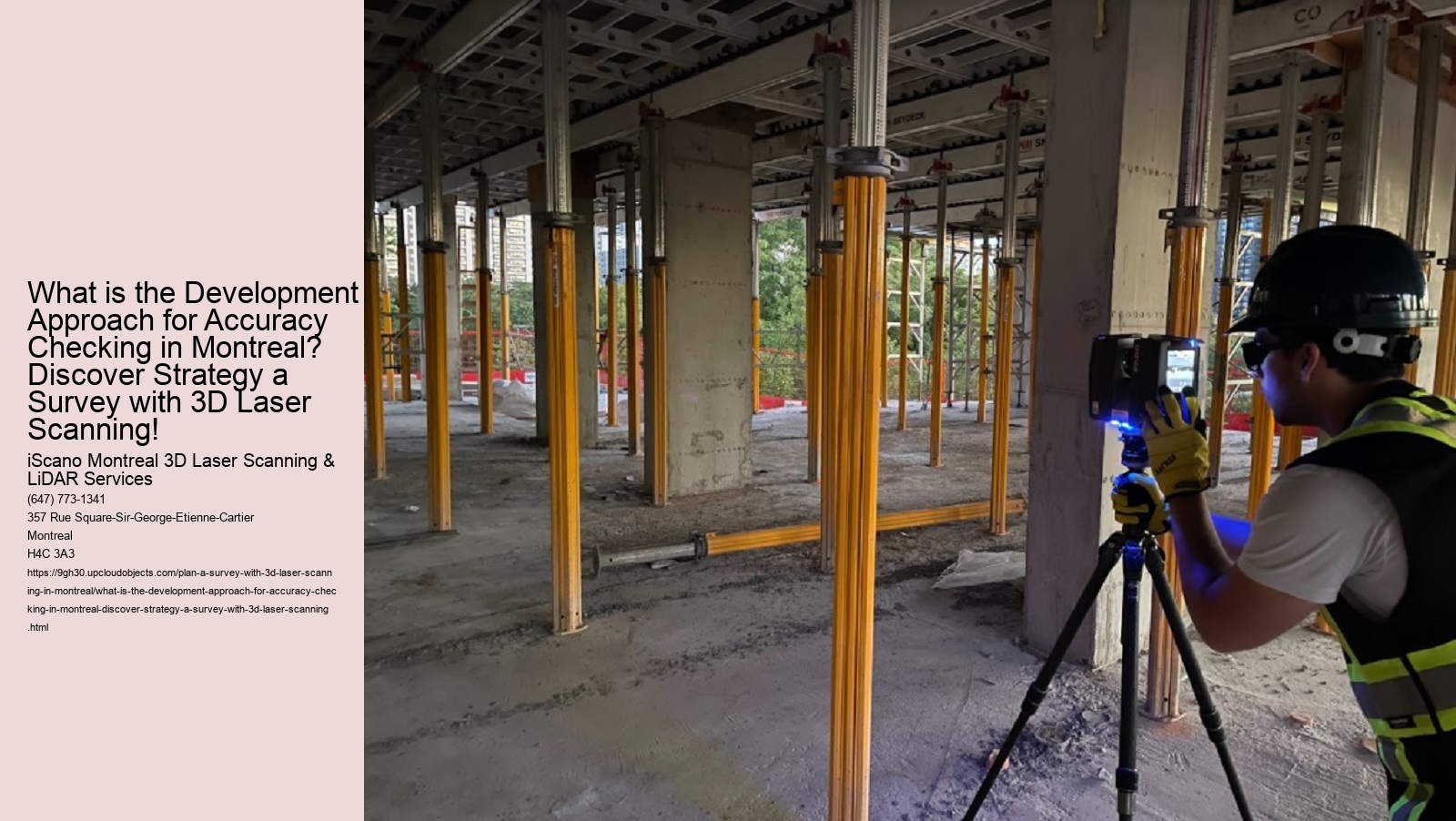
As soon as the strategy remains in location, surveyors use 3D laser scanners to capture the data. These tools are generally installed on tripods and can be run from another location, considerably lowering the requirement for property surveyors to access difficult or dangerous surface. The speed of data acquisition is one more major advantage; a website that would take days to check with traditional techniques can currently be checked in just a few hours.
After the information is gathered, it is refined using specialized software program to create in-depth 3D designs. These models can be evaluated, shared electronically, and used for
The introduction of 3D laser scanning technology has actually transformed the field of precision surveying, and nowhere is this extra noticeable than in the bustling metropolis of Montreal. This vibrant Canadian city, with its blend of historic style and contemporary framework, presents distinct obstacles and chances for property surveyors. The advancement technique for accuracy surveying has evolved substantially with the assimilation of 3D laser scanning, changing the method experts in Montreal strategy and implement their surveys.
3D laser scanning, additionally called LiDAR (Light Discovery and Ranging), is an advanced innovation that records in-depth three-dimensional information concerning physical items and the setting. It functions by emitting a laser beam towards a target and gauging the time it takes for the light to mirror back to the scanner. This process occurs at exceptionally fast prices, making it possible for the capture of numerous data factors in an issue of minutes. These data factors, known as point clouds, develop an accurate electronic depiction of the checked location.
In Montreal, where the conservation of heritage websites is as important as the construction of brand-new advancements, 3D laser scanning provides a non-intrusive and very accurate approach of recording status quo. Surveyors can catch the minutest details of a website without physical contact, making it excellent for sensitive or inaccessible areas. For new constructions, this modern technology help in the creation of as-built designs, making certain that the last develop adjusts precisely to the design specs.
The procedure of preparing a study with 3D laser scanning in Montreal begins with a clear understanding of the project needs. Land surveyors must consider the scope of the job, the level of information called for, and the end-use of the information. When the goals are established, they can select the appropriate scanning equipment and techniques to attain the preferred outcomes.
Throughout the survey, several scans from different placements are usually required to get a complete photo of the site. These private scans are after that straightened and combined right into an extensive 3D design. Advanced software program devices enable land surveyors to procedure and analyze the factor cloud data, removing valuable details such as measurements, volumes, and architectural contortions.
The advantages of using 3D laser scanning for precision surveying in Montreal are numerous. It considerably reduces the moment and labor needed for standard surveying approaches, and the high degree of precision minimizes the risk of expensive errors. Moreover, the electronic nature of the information makes it conveniently shareable among job stakeholders, facilitating far better interaction and partnership.
To conclude, the growth strategy for accuracy checking in Montreal has been
Accurate surveying has constantly been the foundation of effective building, improvement, and documents projects. In Montreal, a city where historical appeal blends with contemporary style, the requirement for accuracy handles an even higher value. The development method for precision surveying has actually seen an innovative shift with the introduction of 3D laser scanning technology. This innovation has actually redefined the typical approaches by providing faster, more exact, and exceptionally comprehensive representations of physical areas. Right here's a detailed procedure of intending a survey making use of 3D laser scanning in the context of Montreal's checking landscape.
Action 1: Specify the Project Range
Prior to embarking on the survey, it's crucial to specify the job range. In Montreal, this might involve detailed building details on a heritage building, an expansive industrial website, or a complex infrastructure network. Recognizing the end objective, whether it's for renovation, building, or historical preservation, establishes the phase for all the succeeding steps.
Action 2: Select the Right Equipment
The following step is choosing the appropriate 3D laser scanning devices. Not all scanners are developed equal; some excel in indoor settings, while others are better matched to vast outside rooms. Montreal's differed landscape demands a versatile scanner that can capture fine details with high accuracy. Factors such as range, resolution, and rate of the scanner should line up with job demands.
Step 3: Survey the Area
Montreal's varied weather can posture challenges, so it is very important to plan the survey for optimal problems. As soon as on website, the study group establishes referral factors and checks for any barriers that might hinder the scanning process. The group likewise identifies the variety of scans needed and the most effective locations to place the scanner to ensure total protection.
Tip 4: Conduct the Scanning
With every little thing in position, the real scanning starts. The 3D laser scanner works by emitting laser beams and capturing the shown light, which is then made use of to produce a factor cloud. This factor cloud will certainly act as an electronic representation of the evaluated area, using a level of information that traditional techniques can not match.
Step 5: Data Processing
After the scan is full, the raw information undertakes handling. This includes tidying up the factor cloud, lining up numerous scans for a cohesive design, and perhaps transforming the data right into styles compatible with CAD or BIM software application. This step is where the information starts to take on a functional type, enabling architects, designers, and planners to engage with the number
The advancement of accuracy surveying has actually been marked by considerable technological advancements, and one of one of the most cutting-edge developments in this area is the arrival of 3D laser scanning, particularly in the facility and dynamic city settings such as Montreal. This innovative strategy has transformed the method surveyors collect information and has actually assisted in the creation of very accurate and in-depth models of city landscapes.
3D laser scanning, also referred to as LiDAR (Light Detection and Ranging), is a non-intrusive approach that captures the physical homes of things and the environment through making use of laser light. This technology discharges numerous laser pulses per 2nd towards the target location, and the moment it takes for each pulse to return is gauged to compute accurate ranges. The result is a thick collection of information factors, referred to as a point cloud, which can be used to create detailed three-dimensional representations of the scanned area.
Among the key benefits of 3D laser scanning for precision checking in metropolitan atmospheres is its exceptional accuracy. The high fidelity of information caught permits the development of digital doubles of buildings, infrastructures, and landscapes with millimeter-level accuracy. This is important in a city like Montreal where historic buildings, modern-day style, and elaborate facilities coexist, and where exact dimensions are necessary for both conservation and growth functions.
One more advantage is the rate of information collection. Conventional surveying methods can be taxing, specifically in dense metropolitan locations with countless features to measure. 3D laser scanning considerably decreases the moment called for to evaluate a website, as it can capture thorough information in a matter of minutes or hours, depending on the dimension and intricacy of the location. This effectiveness not just reduces labor costs but additionally minimizes interruptions in active city setups.
Furthermore, 3D laser scanning enhances safety for both the surveyors and the general public. By enabling remote data collection, property surveyors can avoid harmful locations or circumstances, such as high traffic locations or unsteady structures. The safety of the general public is likewise made certain as the modern technology allows for marginal interference with day-to-day tasks, minimizing the danger of accidents associated with conventional surveying equipment set up on-site.
Data captured by means of 3D laser scanning can also be easily shared and integrated right into various software program systems for additional analysis, which is important for collective city growth tasks. Architects, designers, and construction experts can work with the exact same exact versions, guaranteeing consistency and reducing mistakes throughout the project lifecycle.
In Montreal, a city with an abundant background and a vibrant city textile, intending
In the dynamic city of Montreal, the development of accuracy surveying has actually taken a substantial jump forward with the combination of 3D laser scanning technology. This advanced approach to surveying is changing the way professionals capture and analyze information, supplying exceptional precision and performance in a variety of building and restoration jobs. In this essay, we will certainly explore the advancement method for precision surveying in Montreal and exactly how 3D laser scanning is used to prepare studies with impressive accuracy.
The core of accuracy checking in Montreal rests on the use of 3D laser scanning, likewise referred to as LiDAR (Light Detection and Ranging). This cutting-edge technology utilizes a laser to gauge and catch the physical qualities of a space or framework in 3 dimensions. The scanner gives off countless laser beams per 2nd, which jump off surface areas and return to the sensing unit, offering precise dimensions of range.
When intending a survey with 3D laser scanning, the primary step is to establish the survey purposes. This could involve recognizing the architectural honesty of a heritage structure, drawing up utility networks, or preparing for a complex building and construction project. Property surveyors should establish what degree of information is needed and the most effective viewpoint for positioning the scanner to cover the entire area of interest.
When the goals are set, surveyors conduct a site visit to acquaint themselves with the location and determine any kind of possible barriers that can hinder the laser scanning procedure. These could consist of relocating vehicles, pedestrians, or environmental factors such as lighting and weather. This reconnaissance is essential for making certain that the scanning process goes efficiently which the information gathered is of the best quality.
The actual survey procedure includes establishing the laser scanner on a tripod and systematically recording information from various locations. Overlapping scans ensure full protection and are later stitched together utilizing specialized software to create a comprehensive electronic depiction of the checked location. This electronic version, known as a factor cloud, contains countless individual data points that can be manipulated and evaluated to draw out useful insights.
The beauty of 3D laser scanning lies in its convenience and accuracy. It can capture minute details of intricate geometries and large environments, making it vital for architects, designers, and building and construction specialists. For instance, in a successful case study, accuracy checking was used to document the intricate façades of historic structures in Old Montreal. The resulting 3D models given engineers with the detailed info needed to plan repair job while protecting the distinct building heritage.
An additional effective application of accuracy checking in Montreal entailed the development of
The advancement of precision checking methods has been changed by the arrival of 3D laser scanning innovation, which has offered property surveyors with the ability to catch thorough and accurate depictions of atmospheres and structures. In Montreal, as in other components of the world, this innovation has actually come to be an invaluable tool for experts in building and construction, design, and urban preparation. However, despite its various benefits, 3D laser scanning is come with by a collection of difficulties and limitations that need to be recognized and dealt with.
One of the main difficulties faced by surveyors utilizing 3D laser scanning in Montreal is the high initial price of devices. The investment required for a high-quality 3D laser scanner can be substantial, which can be an obstacle for tiny firms or individual land surveyors. Along with the in advance cost, the upkeep and prospective updates to software program and hardware can even more add to the economic problem.
One more limitation is the reliance on line-of-sight. Laser scanners can just capture surfaces that are straight noticeable to them. In intricate metropolitan settings such as Montreal, with its blend of historical and modern-day architecture, this can cause information voids where the laser can not reach due to obstructions. Land surveyors need to for that reason prepare their scans meticulously and may require to perform multiple scans from different areas to ensure total coverage.
Weather conditions can likewise influence the efficiency of 3D laser scanning. Adverse climate, such as heavy rain or snow, which Montreal can experience, can disrupt the precision of the laser scans. Cold temperature levels can affect tools performance and battery life, while brilliant sunshine can saturate sensors, decreasing the quality of the information captured.
Information handling is another location where challenges develop. The raw information gathered from 3D laser scans is usually voluminous and requires considerable computational power and time to process into useful designs. This handling can become a bottleneck, particularly for large jobs, necessitating durable equipment and experienced drivers that can manage and manipulate the information effectively.
Furthermore, while 3D laser scanning supplies high precision, it is not immune to mistakes. Calibration, instrument stability, and individual experience all play essential duties in the accuracy of the final output. Inaccurate information can cause pricey errors in the planning and building stages of a job, stressing the need for rigorous quality control actions.
Finally, there is a learning curve connected with 3D laser scanning technology. Checking professionals should stay abreast of the most recent developments and be adept at using complex software program for information analysis. This requires recurring training and expert development,
Future Innovations in Precision Surveying Technologies and Techniques
In the dynamic city of Montreal, the evolution of precision checking strategies is a necessary aspect of city development, framework maintenance, and construction projects. The development technique for accuracy surveying in Montreal is significantly accepting cutting-edge innovations, with 3D laser scanning at the forefront of this transformative period. Let's delve into how this modern technology is revolutionizing the evaluating landscape and what future advancements might additionally improve precision in checking approaches.
Finding the Prospective of 3D Laser Scanning
3D laser scanning, additionally referred to as LiDAR (Light Discovery and Ranging), has actually revolutionized the area of accuracy surveying by providing fast, accurate, and detailed measurements of physical rooms. This non-intrusive approach entails emitting laser beam of lights towards the target area and capturing the shown light to produce point clouds. These point clouds form high-resolution digital 3D models of the checked location.
In Montreal, the application of 3D laser scanning is essential in the conservation of historic style, the building of brand-new growths, and the growth of transport networks. Surveyors can now record the intricacies of intricate facades, monitor construction progress in real-time, and make sure that projects follow strict tolerances, all with minimal disruption to the surrounding atmosphere.
Planning a Survey with 3D Laser Scanning
Planning a study with 3D laser scanning innovation begins with developing clear objectives. In Montreal, where both modern high-rises and historic erections exist together, it's imperative to customize the survey technique according to the project's requirements. Land surveyors have to consider aspects such as the level of information called for, the size of the location to be checked, and the prospective obstacles that could impede the scanning process.
When the objectives are established, the next step is to position the laser scanning equipment tactically around the website to make certain thorough coverage. As the information is gathered, it's refined through innovative software application that stitches together the factor clouds, developing a natural 3D version. This electronic representation after that functions as a fundamental tool for designers, designers, and stakeholders to assess and make educated decisions.
Imagining Future Innovations
The future of accuracy surveying in Montreal looks intense, with the potential for significant improvements imminent. One such development is the assimilation of expert system (AI) with 3D laser scanning. AI formulas can improve data handling, automate attribute recognition, and spot adjustments with time, causing even
Main articles: BIXI Montréal and PBSC Urban Solutions
The city of Montreal is world-renowned for being in the top 20 most cyclist-friendly cities around the globe.[254] It follows that they have one of the world's most successful bike share systems in BIXI. First launched in 2009[255] with Montreal-based PBSC Urban Solutions ICONIC bikes, the bicycle-sharing scheme has since grown its fleet to include 750 docking and charging stations across the different neighbourhoods with 9000 bikes available for users.[256] In what the STM states is a mission to combine different forms of mobility, transit card holders can now take advantage of their membership to also rent bicycles at select stations.
iScano Montreal employs state-of-the-art laser scanners, including [insert specific models], ensuring high-quality and detailed data capture.
iScano Montreal serves as a catalyst for innovation by introducing advanced 3D laser scanning technologies and methodologies to the construction and engineering sectors in Montreal.
iScano Montreal's expertise includes navigating and overcoming challenges presented by Montreal's urban landscape, ensuring accurate and reliable 3D scanning results.
Yes, iScano's services can be applied for quality control and assurance, ensuring the integrity of construction materials in the manufacturing process.