3D laser scanning has become a cornerstone on the planet of precision measurement, engineering, and electronic depiction, tracing its origins back to the very early clinical expeditions into light and optics. Open the Future of Accuracy: What is 3D Laser Scanning and Exactly How Can You Master It Step-by-Step? . The historic advancement of this technology is an interesting trip of clinical resourcefulness and relentless technology that has actually transformed numerous industries.
The beginning of 3D laser scanning can be mapped back to the 1960s when the very first laser was designed. At first, these lasers were used for basic varying jobs, but as the innovation developed, the possibility for capturing the real world in digital form became apparent. By the 1980s and 1990s, the initial real 3D laser scanners arised, albeit cumbersome and expensive. These makers utilized time-of-flight, phase-shift, or triangulation techniques to measure distances and were largely utilized in manufacturing, evaluating, and the movie sector for creating visual effects.
Quick forward to the here and now, and 3D laser scanners have gone through an impressive makeover. They have actually become a lot more compact, mobile, and user-friendly while providing greater resolution and faster information collection rates. Advancements such as structured light scanning and LiDAR (Light Detection and Ranging) have increased the applications of 3D laser scanners to consist of style, archaeology, forensics, and even independent lorry navigating.
For those eager to grasp 3D laser scanning, it's necessary to approach it step-by-step, beginning with a strong structure in the underlying concepts. Beginning by comprehending the various sorts of laser scanning innovations and their proper usage situations. Realizing the basics of laser safety and security, point cloud data, and the relevance of precision and resolution is crucial.
Next off, acquaint yourself with the equipment. Obtain hands-on experience with various scanners and discover exactly how to establish them up properly. Each scanner has its traits and attributes, so knowing exactly how to calibrate and run them successfully is essential to capturing premium information.
The third action entails mastering the software application that processes the raw data accumulated by the scanners. This consists of finding out how to cleanse, align, and analyze factor clouds, along with just how to convert them into useful 3D versions or other deliverables. Effectiveness in software program is what turns raw data into useful insights and items.
As your skills expand, explore advanced techniques such as integrating 3D scanning data with various other information resources like GPS or BIM (Building Information Modeling). Explore the frontiers of 3D scanning by remaining upgraded on the most up to date research and development in
3D laser scanning is a cutting-edge technology that catches the shape of physical things making use of a laser to gather information on its form and potentially its look. This data can then be used to produce electronic, three-dimensional depictions. The technology is widely used in various industries, consisting of manufacturing, design, construction, and even amusement, for applications such as reverse engineering, quality control, and digital content creation. Allow's look into the key components and sorts of 3D laser scanners to better recognize how this innovation works and how one can harness its complete capacity.
Secret Elements of a 3D Laser Scanner
At its core, a 3D laser scanner generally consists of the following parts:
Laser Resource: The heart of the scanner, the laser resource produces a beam of light that is used to scan the subject.
Detector (Sensing Unit): As soon as the laser hits the topic, the sensing unit detects the shown light to capture details regarding the things's surface.
Interior Processor: The processor analyzes the sensing unit information, converting it right into a point cloud or 3D version.
Interface: This is how the operator interacts with the scanner, generally through a computer or on-device controls, to begin scans and adjust setups.
Positioning System: This might be a straightforward tripod, a robotic arm, or an integrated system that assists to track the scanner's place about the item being checked.
Types of 3D Laser Scanners
3D laser scanners come in numerous kinds, each matched to particular applications:
Handheld Scanners: These are mobile and flexible, making them suitable for scanning objects of various dimensions and in various places. They are typically used in quality control and cultural heritage preservation.
Fixed Scanners: Fixed in position, these scanners catch highly detailed scans of things that can be brought to them. They are commonly found in producing for inspecting little to medium-sized components.
Terrestrial Scanners: Designed for large tasks, such as scanning buildings or landscapes. These are frequently utilized in building and construction and civil design.
Airborne Scanners: Mounted on drones or aircraft, these scanners are made use of for topographic surveys and mapping large areas.
Mastering 3D Laser Scanning
To understand 3D laser scanning, one have to understand both the software and hardware facets of the process. Here is a step-by-step method:
3D laser scanning is a futuristic modern technology that has transformed the method we record and analyze the real world. It's a non-contact, non-destructive innovation that electronically captures the shape of physical items making use of a line of laser light. 3D laser scanners create "point clouds" of information from the surface area of an item. Essentially, these scanners swiftly record precise measurements in three dimensions, permitting the careful entertainment of complex geometries. This method has actually located applications in numerous fields such as production, design, engineering, and archaeology, among others.
If you're keen to grasp the art of 3D laser scanning, right here's a step-by-step guide that will certainly aid you open the future of accuracy:
Action 1: Recognize the Basics
Before diving into the useful aspects, it's important to get a great understanding of the essential principles of 3D laser scanning. Learn more about exactly how the technology functions, the kinds of laser scanners available (handheld, fixed, terrestrial, air-borne), and the differences between them. Comprehending the fundamentals will certainly permit you to select the ideal equipment for your particular demands.
Action 2: Select the Right Tools
Different projects need different scanning tools. Take into consideration the size of the item or area you intend to scan, the level of information required, the environment you'll be working in, and your budget. Research and contrast different scanners to locate the one that suits your project's demands.
Step 3: Get Ready For Scanning
Preparation is essential for successful scanning. Guarantee the object or location to be checked is tidy and free from unnecessary obstructions. Calibration of the scanner is crucial for precision, so comply with the manufacturer's guidelines meticulously. If you're scanning outdoors, consider the time of day and climate condition that might impact your data collection.
Tip 4: Conduct the Scan
Placement your scanner strategically to capture all the essential angles of the object or atmosphere. Start with a test scan to check the settings and make any essential modifications. For larger tasks, you might need to carry out multiple scans from different placements to ensure total protection. Persistence and interest to detail are essential at this stage.
Tip 5: Refine the Information
After recording the raw data, you'll require to process it using specialized software application. This step includes tidying up any noise, lining up several scans (if you carried out greater than one), and creating a coherent point cloud. From the point cloud, you can create 3D versions or 2D illustrations, depending
3D laser scanning has actually emerged as a technical marvel that reinvents the way we catch and use data from the physical world. This sophisticated strategy, which entails the use of laser light to exactly determine and tape the form and surface area of items, has located applications in a varied range of sectors, each gaining from its one-of-a-kind capabilities to boost accuracy, performance, and development.
In the world of style and building, 3D laser scanning is a game-changer. Architects harness this technology to create highly precise versions of existing structures for remodelling or historic preservation jobs. The capability to swiftly and properly determine structures, despite exactly how facility, allows for precise preparation and lessens mistakes that might occur with hand-operated measurements. In a similar way, building and construction professionals utilize 3D scans to monitor the progression of a job, comparing real-time situations with style versions, making sure that everything is on track and up to specification.
The manufacturing field, understood for its stubborn demand for precision, has likewise embraced 3D laser scanning. Makers use this modern technology for quality control, evaluating components and settings up to ensure they fulfill limited tolerances. Custom manufacture, too, has profited tremendously, with 3D scanning offering the detailed data required to produce bespoke parts that fit flawlessly with existing items or atmospheres.
Worldwide of heritage preservation, 3D laser scanning plays a crucial role in protecting the past for future generations. By producing in-depth electronic representations of archaeological sites and artifacts, preservationists can evaluate, recover, and even replicate them with an unmatched level of detail. This capability is important for academic functions and for keeping social heritage, specifically in cases where the physical preservation of an item or site is challenging.
The vehicle market uses 3D laser scanning to enhance both design and screening stages. Engineers scan prototype models or existing components to improve the rules of aerodynamics, functional designs, and structural integrity. The detailed feedback obtained from these scans permits fast version and optimization of designs prior to devoting to expensive manufacturing processes.
Even the entertainment industry has used the power of 3D laser scanning, specifically in the production of visual effects for movies and video games. The capacity to capture the specific measurements and textures of objects or stars enables the development of strikingly reasonable digital models that mix effortlessly with electronic atmospheres, boosting the target market's immersive experience.
In the area of forensics, 3D laser scanning gives law enforcement and detectives with the ability to catch crime scenes or crash sites in meticulous information. This not just aids in the reconstruction of events
3D laser scanning stands as a beacon of modern measurement and imaging, a technology that changes things right into electronic 3D models with amazing precision. It has revolutionized markets from archaeology to manufacturing, offering devices for specific duplication, evaluation, and reverse engineering. Nonetheless, like any type of technology, it features its collection of obstacles and mistakes that users have to browse to harness its full potential.
One usual difficulty in 3D laser scanning is managing reflective surfaces. Lasers bounce off glossy products, causing sound and errors in the resulting data. To overcome this, experts can apply an anti-reflective spray or strategically area scanning targets to lessen representations. Finding out the optimum setup for various products is a critical action in understanding 3D laser scanning.
Ecological conditions likewise pose considerable obstacles. Exterior aspects such as illumination and vibration can influence the scanner's ability to capture accurate information. Operators must as a result choose the right time and establishing for scanning or use stabilization techniques and correct lights services to make certain uniformity and accuracy.
Calibration is another important element. An uncalibrated scanner can result in mistakes in measurements, which can be costly and lengthy to remedy. Understanding 3D laser scanning includes regular checks and calibration methods to maintain the integrity of the information recorded.
Software plays an essential function in processing the huge quantities of data produced by 3D laser scanners. An usual pitfall is the capacity for software application to be either too simplified, restricting the use of the information, or as well intricate, making it hard to reach for efficient use. Striking the ideal balance and becoming competent in information control and interpretation are vital for any person wanting to excel in the field.
Training and experience are the linchpins of mastering 3D laser scanning. The modern technology is innovative and needs a deep understanding of both the software and hardware. Operators must be skilled in various scanning strategies and know how to adapt to various scenarios and materials. Continuous knowing and remaining updated with the latest developments in the industry are essential.
To conclude, getting over the challenges and preventing the mistakes associated with 3D laser scanning is a journey of continual learning and adjustment. By understanding the restrictions of the modern technology and developing techniques to mitigate them, professionals can open the future of accuracy, transforming the way we catch and use the physical world in digital kind. As we step forward, it is the proficiency of these nuances that will certainly define the experts and leaders in the area of 3D laser scanning.
As we peer right into the future of 3D laser scanning technology, we are depending on the precipice of a remarkable improvement that is poised to redefine precision, efficiency, and technology throughout a myriad of sectors. To unlock the future of accuracy with this technology, it is vital to understand what 3D laser scanning is and to grasp it step-by-step to harness its complete possibility.
3D laser scanning, at its core, is a non-intrusive approach of recording the precise shape and size of physical items utilizing a laser to gather information on their appearance and construct electronic, three-dimensional depictions. This procedure, called point cloud production, makes it possible for the exact replication of the scanned objects into digital form, which can be utilized for different applications such as reverse engineering, quality control, and virtual reality models.
To understand 3D laser scanning, one must carry out a methodical approach, starting with an extensive understanding of the basic concepts. The initial step is picking the ideal scanner for the job; various scanners are created for different ranges and degrees of detail, from small commercial components to huge building structures.
When the suitable scanner is picked, the following action is to set up the scanning atmosphere, guaranteeing that the item is secure and well-lit, which the scanner's specifications are optimized for the desired resolution and precision. Following configuration, the actual scanning process entails relocating the laser over the surface area of the things, recording numerous dimensions per secondly. These dimensions are then processed making use of specialized software program to develop the point cloud and subsequently, a 3D design.
As we look ahead, future trends and advancements in 3D laser scanning technology are positioned to improve its precision further and broaden its applications. Advancements in sensor technology are anticipated to give also higher resolution information, while AI and machine learning will simplify data processing, allowing for the automated classification of features and anomalies in scanned objects.
Assimilation with other technologies, such as augmented reality (AR) and the Internet of Things (IoT), is anticipated to allow extra advanced communications with scanned information. For instance, in building and construction, AR can overlay the specific dimensions of a 3D scanned design onto the physical job site for exact installation of elements.
Additionally imminent, we might see the miniaturization of scanning gadgets, allowing their unification into smartphones and tablet computers. This democratization of 3D laser scanning technology might revolutionize fields like medication, where bespoke prosthetics can be developed and fitted with unmatched rate and precision.
Furthermore, the push for sustainability and
Further information: Climate change in Connecticut
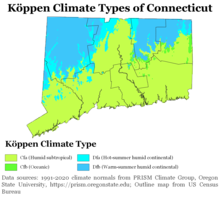
Köppen climate types of Connecticut, using 1991–2020 climate normals.
Connecticut lies at the rough transition zone between the southern end of the humid continental climate, and the northern portion of the humid subtropical climate. Northern Connecticut generally experiences a climate with cold winters with moderate snowfall and hot, humid summers. Far southern and coastal Connecticut has a climate with cool winters with a mix of rain and infrequent snow, and the long hot and humid summers typical of the middle and lower East Coast.
Lidar (, additionally LIDAR, LiDAR or LADAR, an acronym of "light detection and ranging" or "laser imaging, detection, and varying") is a method for identifying ranges by targeting a things or a surface area with a laser and measuring the moment for the reflected light to return to the receiver. Lidar may run in a set direction (e. g., upright) or it might scan several instructions, in which instance it is known as lidar scanning or 3D laser scanning, an unique mix of 3-D scanning and laser scanning. Lidar has earthbound, airborne, and mobile applications. Lidar is typically made use of to make high-resolution maps, with applications in evaluating, geodesy, geomatics, archaeology, geography, geology, geomorphology, seismology, forestry, climatic physics, laser support, air-borne laser swathe mapping (ALSM), and laser altimetry. It is made use of to make electronic 3-D representations of areas on the Planet's surface and ocean bottom of the intertidal and near seaside zone by differing the wavelength of light. It has also been progressively utilized in control and navigation for self-governing cars and trucks and for the helicopter Ingenuity on its record-setting flights over the surface of Mars. The evolution of quantum modern technology has triggered the introduction of Quantum Lidar, showing greater effectiveness and sensitivity when compared to conventional lidar systems.
.3D scanning is the process of examining a real-world things or atmosphere to gather three dimensional data of its shape and perhaps its appearance (e. g. shade). The collected data can after that be utilized to build electronic 3D models. A 3D scanner can be based on various innovations, each with its very own limitations, advantages and expenses. Several constraints in the type of objects that can be digitised are still present. For instance, optical modern technology might come across many troubles with dark, shiny, reflective or clear items. For example, industrial computed tomography scanning, structured-light 3D scanners, LiDAR and Time Of Flight 3D Scanners can be used to construct digital 3D designs, without damaging testing. Gathered 3D data is useful for a wide variety of applications. These devices are used thoroughly by the show business in the production of motion pictures and computer game, including online fact. Other common applications of this technology consist of augmented reality, activity capture, gesture recognition, robotic mapping, commercial design, orthotics and prosthetics, reverse design and prototyping, top quality control/inspection and the digitization of social artefacts.
.Connecticut (kəə-NET-ik- ə t) is the most southern state in the New England region of the Eastern United States. It lies on Long Island Audio, which goes into the Atlantic Sea. It surrounds Rhode Island to the eastern, Massachusetts to the north, New york city to the west, and Long Island Sound to the south. Its resources is Hartford, and its most populated city is Bridgeport. Connecticut exists between the major hubs of New york city City and Boston along the Northeast Corridor. The New york city metropolitan area, that includes six of Connecticut's seven largest cities, extends well into the southwestern component of the state, while the northeastern corner reaches Greater Boston. Connecticut is the third-smallest state by location after Rhode Island and Delaware, and the 29th most populated with slightly greater than 3. 6 million locals since 2020, ranking it fourth amongst one of the most densely populated U. S. states. The state is named after the Connecticut River, the lengthiest in New England, which approximately bisects the state and drains pipes into the Long Island Sound in between the towns of Old Saybrook and Old Lyme. The name of the river is in turn originated from anglicized spellings of Quinnetuket, a Mohegan-Pequot word for "long tidal river". Prior to the arrival of the very first European settlers, the area was inhabited by various Algonquian tribes. In 1633, the Dutch West India Company established a tiny, short-term settlement called House of Hope in Hartford. Half of Connecticut was initially declared by the Dutch swarm New Netherland, that included a lot of the land in between the Connecticut and Delaware Rivers, although the very first significant negotiations were developed by the English around the exact same time. Thomas Hooker led a band of followers from the Massachusetts Bay Nest to develop the Connecticut Colony, while various other inhabitants from Massachusetts founded the Saybrook Swarm and the New Haven Nest; both merged right into the previous by 1664. Connecticut's main nickname, the "Constitution State", describes the Basic Orders embraced by the Connecticut Colony in 1639, which is thought about by some to be the very first written constitution in Western background. As one of the Thirteen Colonies that turned down British guideline during the American Change, Connecticut was influential in the growth of the federal government of the United States. In 1787, Roger Sherman and Oliver Ellsworth, state delegates to the Constitutional Convention, recommended a compromise in between the Virginia and New Jacket Plans; its bicameral structure for Congress, with a specifically proportional and equivalent representation of the states in your home of Representatives and Senate, was taken on and stays to this particular day. In January 1788, Connecticut came to be the fifth state to ratify the Constitution. Connecticut is an established and wealthy state, performing well on the Human being Growth Index and on various metrics of revenue except for equal rights. It is home to a variety of prestigious universities, consisting of Yale College in New Haven, as well as other liberal arts colleges and private boarding colleges in and around the "Understanding Hallway". As a result of its location, Connecticut has kept a strong maritime custom; the United States Shore Guard Academy lies in New London by the Thames River. The state is likewise associated with the aerospace sector through significant business Pratt & & Whitney and Sikorsky Aircraft headquartered in East Hartford and Stratford, specifically.Historically a manufacturing center for arms, equipment, and timepieces, Connecticut, just like the remainder of the region, had actually transitioned right into an economic climate based upon the economic, insurance, and property fields; lots of international firms offering such solutions can be discovered focused in the state resources of Hartford and along the Gold Coast in Fairfield Region.
.


I requested the iScano team to do a 3D laser scanning service in Stamford for a data center. The team was professional and quick in making the CAD/BIM. Will certainly use their services again.

I required someone a 3D Laser Scanning crew to do a BIM and an as-built CAD floor plan for a house I’m renovating and the professional iScano team did a great job. I really appreciate Brendan and Sebastian’s help scanning and designing the restaurant the way I wanted it. Will use their 3D scanning services again!
Yes, iScano Connecticut has experience in scanning historical landmarks, preserving their intricate details for documentation and restoration purposes.
iScano Connecticut utilizes advanced laser scanners for high-resolution and detailed 3D scanning services.
iScano's laser scanning technology delivers high accuracy, with precision measured in millimeters, ensuring reliable and detailed data capture.
iScano prioritizes continuous learning and invests in staying updated with the latest advancements in laser scanning technology to provide cutting-edge services.
iScano's laser scanning services are versatile and have few limitations, making them applicable across various industries and environments.
iScano's laser scanners are designed to capture both indoor and outdoor environments effectively, providing a comprehensive scanning solution.
iScano is flexible and works closely with clients to understand their specific project requirements, tailoring the approach and deliverables accordingly.
Yes, iScano Connecticut is equipped to handle large-scale scanning projects, ensuring comprehensive and accurate data capture.