As Connecticut remains to browse the waves of financial advancement, it's coming to be increasingly clear that modern technology plays a pivotal role in sustaining growth and competitiveness. What is Sustaining Connecticut's Economic Development? Discover the Top Industries Reaping the Rewards of 3D Laser Scanning Technology! . Among the different technological advancements, 3D laser scanning technology has emerged as a transformative pressure throughout numerous markets within the state. This essay offers a summary of 3D laser scanning technology and highlights the leading industries in Connecticut reaping its benefits.
3D laser scanning, likewise known as LiDAR (Light Detection and Ranging), is a non-contact, non-destructive modern technology that electronically catches the shape of physical things making use of a line of laser light. This innovation produces "" factor clouds"" of information from the surface area of an item. In essence, 3D laser scanners gauge great details and capture free-form shapes to rapidly produce very exact factor clouds. It is extensively regarded for its accuracy, rate, and flexibility.
In Connecticut, the aerospace sector stands as a main recipient of 3D laser scanning technology. The state is home to a considerable variety of aerospace suppliers that rely on the extreme accuracy of 3D laser scanning to produce elements that fulfill strenuous safety and security and top quality requirements. The innovation makes it possible for rapid prototyping, quality control, and the ability to reverse-engineer parts with intricate geometries, therefore minimizing time-to-market for new technologies.
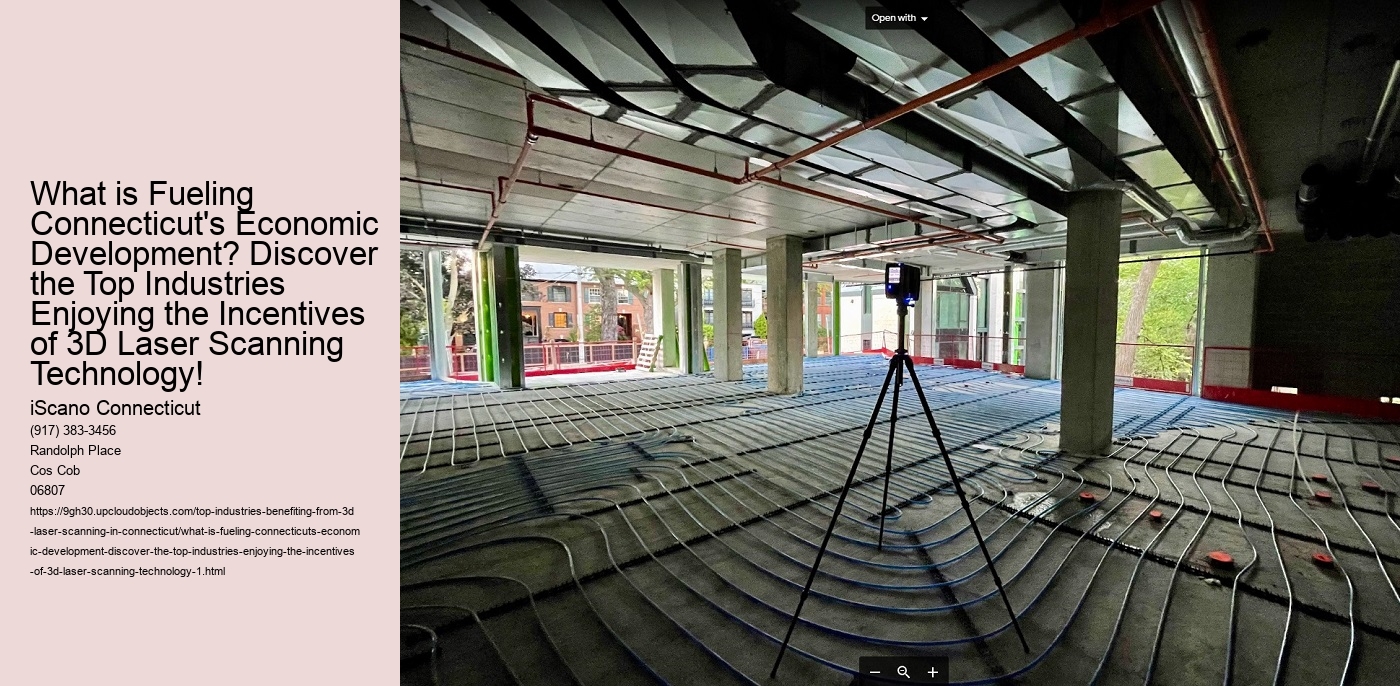
The construction and architecture sectors additionally greatly take advantage of 3D laser scanning. In a state with an abundant tapestry of historical buildings and contemporary facilities, keeping and restoring structures calls for meticulous planning and execution. 3D laser scanning offers designers and designers with detailed models of existing structures, enabling precise refurbishments and ensuring brand-new enhancements blend seamlessly with the old. Moreover, it helps with the tracking of construction projects, making certain that they remain on track and within budget plan.
One more industry profiting is making. Connecticut's production field, which includes medical tool manufacturing, automotive, and commercial equipment, utilizes 3D laser scanning to maximize their style procedures, improve quality assurance, and simplify their supply chains. The innovation's capacity to swiftly record and examine intricate shapes and sizes permits better quality control and a more effective production process.
Marine market in Connecticut additionally utilizes 3D laser scanning to design and manufacture watercrafts and ship elements, making certain precision and security in a market where there is little margin for mistake. This innovation is particularly valuable for retrofitting ships, as it can precisely record the complex shapes and tight areas of a ship's interior, which are often tough to measure with traditional approaches.
In ecological administration and preparation
The Aerospace Sector: Accuracy and Performance with 3D Scanning
Connecticut's financial landscape is a dynamic tapestry of advancement and industriousness, with the aerospace sector skyrocketing as a considerable player. Amongst the technical wonders moving this sector to brand-new elevations is the development of 3D laser scanning technology, a tool that symbolizes the future of precision design and production.
In the heart of the Constitution State, aerospace companies are not just manufacturing parts; they are crafting masterpieces of design that need to adhere to the most strict criteria of top quality and accuracy. The stakes are high, as also the smallest disparity can jeopardize the safety and performance of an aircraft. This is where 3D laser scanning technology comes to be vital.
3D scanning has actually changed how aerospace firms come close to the style, prototyping, and production procedures. With the capability to catch the geometry of things with awesome precision, designers can develop digital reproductions of components, assemblies, and even whole airplane with a level of information that was formerly unattainable. These digital models are then used for a myriad of purposes, from reverse engineering tradition components to performing limited component analyses and aerodynamic simulations.
The benefits of 3D scanning in aerospace extend to quality control as well. Evaluating the parts produced, comparing them against the initial CAD layouts, or checking the fit of put together sections can be completed with rate and precision that hand-operated techniques can not match. This not just ensures that every piece fulfills the sector's strenuous standards but additionally considerably reduces the moment and price related to the trial-and-error of prototype advancement.
In addition, the innovation has a sustainable side. By optimizing designs for product effectiveness and assisting in the fixing and repair of parts rather than replacement, 3D scanning sustains a more sustainable production cycle. This lines up with an expanding awareness towards environmental obligation in the aerospace market.
The ripple effects of these developments in 3D scanning technology extend beyond the aerospace industry, influencing various other top industries in Connecticut. From clinical device manufacturing, where accuracy can influence person end results, to the aquatic sector, where hull layouts benefit from the in-depth scans to improve efficiency and safety, 3D laser scanning is a cornerstone in the state's economic growth.
To conclude, 3D laser scanning technology is a cornerstone of technology within Connecticut's aerospace industry, driving economic development with its assurance of precision, efficiency, and sustainability. As the state continues to embrace and incorporate these sophisticated modern technologies, it stands positioned to maintain its online reputation as a hub of industrial expertise and financial
In the evolving landscape of Connecticut's economic situation, the integration of 3D laser scanning technology is having a transformative influence on several markets, working as a stimulant for sustained financial advancement. This modern modern technology captures comprehensive three-dimensional information concerning physical objects, settings, and intricate geometries in a portion of the moment it takes with standard methods, making it possible for accuracy and performance that were once unthinkable.
The construction and design fields go to the center of this technological change. 3D laser scanning enhances design and structure procedures by providing exact measurements and developing thorough digital models. It effectively minimizes the moment spent on hand-operated surveys and minimizes human error, which translates to significant price savings and sped up job timelines. In Connecticut, where urban renewal and framework advancement are ongoing, the capacity to promptly and precisely evaluate existing problems is vital. For instance, in the renovation of historic buildings, laser scanning preserves building honesty while offering a clear path for modernization.
Apart from building and construction and design, various other industries in Connecticut are likewise profiting of 3D laser scanning technology. The manufacturing sector, specifically aerospace and defense, employs laser scanning for quality control, reverse engineering, and the rapid prototyping of complex parts. By guaranteeing parts are built to exact specifications, Connecticut's manufacturers can preserve a competitive edge in the international market.
The power industry, consisting of nuclear and renewable energy fields, utilizes 3D laser scanning for center upkeep, retrofitting, and upgrading aging facilities. This modern technology enhances security by enabling remote evaluation of dangerous locations and makes sure governing conformity by providing extensive documentation for audits.
Furthermore, the heritage and historical areas leverage laser scanning to file and protect Connecticut's rich historical sites. This non-invasive technique permits the electronic preservation of artifacts and sites, making sure that they can be studied and appreciated for generations to come.
In the realm of public safety and forensics, 3D laser scanning is an effective device for criminal activity scene examination and accident reconstruction. By developing specific designs of crime scenes, law enforcement can assess occurrences more thoroughly and present compelling visual proof in court process.
Overall, the combination of 3D laser scanning technology is a testament to Connecticut's dedication to advancement and financial development. By accepting these advancements, the state is not just enhancing the efficiency and precision of its markets however is also ensuring that it stays at the cutting side of technological development. As industries continue to harness the power of 3D laser scanning, Connecticut is poised to experience a brand-new age of success, noted by improved productivity and sustainability
Connecticut's economic advancement is a multifaceted journey, driven by innovation, performance, and the unrelenting pursuit of high quality. At the heart of this trip is the manufacturing field, a vital gear in the state's financial engine that has actually been gaining the transformative benefits of 3D laser scanning technology. This essay explores how this cutting-edge technology is enhancing product development and quality control, consequently maintaining Connecticut's economic development.
3D laser scanning technology has actually become a game-changer for Connecticut's producers. By allowing accurate dimension and evaluation of components and assemblies, it has actually unlocked new degrees of precision and information that were formerly unattainable. This innovation captures the form of physical items utilizing a line of laser light, creating electronic 3D representations that can be made use of for a myriad of applications, from reverse engineering to quality assurance.
In the realm of product development, 3D laser scanning accelerates the design process, enabling designers to swiftly model and improve their ideas. For Connecticut's aerospace and shipbuilding markets, this indicates that facility elements can be created and evaluated with unmatched rate and accuracy. As the state is home to leading suppliers like Pratt & & Whitney and Electric Boat, the capability to rapidly iterate and best layouts is not simply a matter of efficiency, however also of keeping an one-upmanship in worldwide markets.
Moreover, 3D laser scanning enhances quality control procedures by giving extensive information on made parts. This permits early discovery of discrepancies and avoids costly production errors. Consequently, Connecticut's makers can assure that the products they provide fulfill the strictest quality criteria, a requirement for sectors where safety and security is vital, such as medical gadgets and protection.
Past boosting specific companies, the adoption of 3D laser scanning technology has wider economic ramifications. It fosters a culture of development that draws in skill and financial investment, producing a virtuous cycle of growth and advancement. As more companies embrace this modern technology, the neighborhood supply chain comes to be a lot more robust, and the workforce much more skilled, additional strengthening Connecticut's online reputation as a hub of manufacturing excellence.
Additionally, the environmental influence of manufacturing is minimized with making use of 3D laser scanning. Boosted precision and lowered product wastefulness contribute to more lasting manufacturing techniques, lining up with the state's objectives of ecological stewardship and liable financial advancement.
To conclude, 3D laser scanning technology is a foundation of modern-day production, supplying Connecticut's markets with the tools they need to grow in a competitive international economy. By enhancing product development and quality control, this
In the captivating New England state of Connecticut, where history whispers from every colonial village and manufacturing facility town, the blend of historic preservation and archaeology with contemporary innovation is not just an academic exercise-- it's an essential part of the state's economic advancement. At the center of this crossway is using 3D laser scanning technology, a device that is improving the means Connecticut shields its past while protecting its future.
Imagine going through the rock streets of Mystic Seaport, where the maritime heritage of Connecticut comes to life. Now, picture a team of specialists furnished with 3D laser scanners meticulously capturing every detail of the historical vessels and structures. This cutting-edge technology permits the creation of exact electronic reproductions, preserving the detailed workmanship of bygone eras for posterity. These digital archives function as critical references for restoration tasks, making certain that any type of repair work or repairs preserve the authenticity of the original frameworks.
Beyond preservation, 3D laser scanning has become a keystone in Connecticut's archaeology efforts. Excavators, as soon as reliant on painstaking hands-on measurements, currently use this technology to rapidly and precisely record excavation sites. The accuracy and speed of 3D scanning not only improve the cataloging of artefacts but additionally reduce the interruption to the sites, which is particularly important in locations of social importance. With the development of virtual site models, researchers worldwide can check out Connecticut's archaeological prizes without ever setting foot in the state, widening the reach of its historical story.
The economic ramifications of these applications are profound. As Connecticut's historical sites draw visitors from across the globe, the enhanced preservation and discussion of these attractions straight translate right into raised site visitor spending, bolstering local organizations and maintaining tasks in the hospitality and service markets. Additionally, the information collected with 3D scanning can be repurposed for educational materials, interactive displays, and also virtual reality experiences, opening new profits streams in the modern technology and creative markets.
Furthermore, 3D laser scanning technology is not restricted to the realms of background and archaeology. Connecticut's production market, particularly aerospace and defense, reaps the benefits of this precision device for quality control, reverse engineering, and product development. The convenience of 3D laser scanning supports the state's credibility as a hub for advancement and manufacturing quality.
As Connecticut continues to welcome the potential of 3D laser scanning, the ramifications for economic development are substantial. By maintaining the past with such contemporary means, the state not only honors its abundant heritage but also cultivates a forward
In the wake of a swiftly evolving technological landscape, the significance of straightening education and workforce training with the needs of a tech-driven economy can not be overstated. Connecticut, a state recognized for its rich background of technology and manufacturing, stands at the cusp of a new era in economic advancement, spurred by the development of 3D laser scanning technology. This modern technology is not just a device; it is an entrance to a future where accuracy, effectiveness, and innovation are the trademarks of leading markets.
At the heart of this makeover is the demand for a workforce that is not only tech-savvy yet likewise proficient at leveraging the abilities of advanced technologies such as 3D laser scanning. Education systems from K-12 to higher education institutions are hence entrusted with a vital function: to prepare students for a labor force that demands a new type of proficiency in electronic devices and data analysis.
3D laser scanning, which develops digital replicas of physical objects and environments with making use of laser light, is changing industries throughout the board. In Connecticut, sectors such as aerospace, shipbuilding, style, and building are profiting of this innovation. By integrating 3D laser scanning into their operations, companies can considerably improve precision and decrease the time needed for processes like prototyping, quality control, and reverse engineering.
As an example, in aerospace, where precision is paramount, 3D laser scanning ensures that components and settings up satisfy strict specs. Shipbuilding take advantage of the technology by streamlining the retrofitting and repair work of maritime vessels. In style, laser scanning help in the precise paperwork and makeover of structures, while in building, it boosts the preparation process and surveillance of development on work websites.
To suffer Connecticut's economic advancement in these leading industries, there is an expanding need for professionals who are proficient in 3D laser scanning technology. Curriculum created around this requirement are emerging as a concern. Community colleges and technical institutions are creating specialized curricula that provide hands-on experience with 3D laser scanning tools. Universities are integrating the innovation right into engineering and style programs, making sure that grads are industry-ready.
Furthermore, workforce training campaigns are pivotal in upskilling existing workers to bridge the tech void. Collaborations in between industry and educational institutions are facilitating the creation of qualification programs and proceeding education and learning training courses customized to the ins and outs of 3D laser scanning applications.
To conclude, as Connecticut continues to harness the power of 3D laser scanning technology for financial advancement, the synergy in between education and workforce training ends up being
In the world of technical development, 3D laser scanning has become a transformative force across different industries, contributing dramatically to Connecticut's financial advancement. As we look to the future, the potential development of this modern technology in the state is significant, yet not without its challenges.
Connecticut's economic landscape varies, with markets varying from aerospace and protection to insurance and money. Nevertheless, some markets have been particularly proficient at leveraging the advantages of 3D laser scanning.
Aerospace and protection, as an example, have utilized 3D laser scanning for precision manufacturing and quality control, making certain that components meet strict specs. This technology has actually been vital in reducing manufacturing mistakes and enhancing security, which are extremely important in this industry. As aerospace companies remain to introduce, the demand for even more exact and faster scanning remedies is most likely to spur growth in the 3D laser scanning market.
In a similar way, the construction and architecture sectors in Connecticut have seen significant take advantage of incorporating 3D laser scanning right into their operations. With its ability to rapidly and accurately catch the measurements of complicated structures, 3D scanning has actually revolutionized the means structures are developed, built, and kept. This performance gain not just results in cost financial savings but additionally improves the possibility for lasting growth practices by decreasing waste and maximizing resource use.
The historical preservation sector likewise stands to take advantage of the growth of 3D laser scanning. Connecticut, with its rich heritage and numerous historic sites, can use this technology to diligently document and protect its historic frameworks. High-resolution scans supply a detailed record that can be made use of for repair and instructional objectives, making certain that the state's background is safeguarded for future generations.
Nevertheless, the future outlook for 3D laser scanning in Connecticut is not without obstacles. One of the primary hurdles is the expense of the technology. Although prices have actually been reducing, the first financial investment for high-grade 3D scanners can still be too high for little to medium-sized ventures. To sustain economic development, it is essential for local companies to have access to affordable scanning remedies, which might require support from state initiatives or public-private partnerships.
Another challenge depends on the availability of experienced workers. The sophisticated nature of 3D laser scanning needs a workforce that is not only practically proficient but additionally with the ability of analyzing and using the data successfully. Investment in education and learning and training programs is critical in developing an ability pool that can drive the innovation's fostering and technology.
Furthermore, concerns related to data management, such as storage, safety, and privacy, should be
History
Main articles: New Netherland, Saybrook Colony, Connecticut Colony, New Haven Colony, New England Confederation, and Dominion of New England
The first European explorer in Connecticut was Dutchman Adriaen Block,[22] who explored the region in 1614. Dutch fur traders then sailed up the Connecticut River, which they called Versche Rivier ("Fresh River"), and built a fort at Dutch Point in Hartford that they named "House of Hope" (Dutch: Huis van Hoop).[23]
On April 26, 1935, the U.S. Post Office issued a postage stamp commemorating the 300th anniversary of the initial settlement of the Connecticut colony.
The Connecticut Colony was originally a number of separate, smaller settlements at Windsor, Wethersfield, Saybrook, Hartford, and New Haven. The first English settlers came in 1633 and settled at Windsor, and then at Wethersfield the following year.[24] John Winthrop the Younger of Massachusetts received a commission to create Saybrook Colony at the mouth of the Connecticut River in 1635.[25]
The main body of settlers came in one large group in 1636. They were Puritans from Massachusetts Bay Colony led by Thomas Hooker, who established the Connecticut Colony at Hartford.[26] The Fundamental Orders of Connecticut were adopted in January 1639, and have been described as the first constitutional document in America.[27]
3D laser scanning is integral to BIM, facilitating the creation of accurate and detailed models that enhance collaboration and decision-making in construction projects.
iScano Connecticut utilizes advanced laser scanners for high-resolution and detailed 3D scanning services.
3D laser scanning improves project accuracy by providing precise measurements, reducing rework, and enhancing overall project outcomes.
iScano's laser scanning technology delivers high accuracy, with precision measured in millimeters, ensuring reliable and detailed data capture.
