When we flash our smiles, we usually take for given the facility orchestra of teeth, gums, and oral tissues working in consistency behind the scenes. What is Lurking Behind Your Smile? Discover What to Get Out Of a Dentist Visit in Corby! . It's easy to neglect refined indications of dental distress when we're not in pain or discomfort. Yet, prowling behind also the most charming smiles can be common dental concerns that go unnoticed without the qualified eye of a dentist. In Corby, a visit to the dentist is not almost getting a routine cleaning; it's a vital action in discovering and attending to these silent oral health dangers.
One of one of the most dangerous problems that can hide behind a relatively healthy and balanced smile is gum disease. In its beginning, referred to as gingivitis, it might offer with little to no pain. However, without detection and correct treatment, it can proceed to periodontitis, which can lead to missing teeth and has actually been connected to various other health issues like heart problem and diabetic issues. During a dental visit in Corby, your dentist can identify the early indications of gum disease, such as inflamed or bleeding gums, and offer treatment to halt its development.
Dental cavity is another usual wrongdoer that can easily go undetected. It typically begins in hard-to-see locations, such as in between teeth or in the grooves of molars. Without routine dental check-ups, dental caries can expand and at some point result in pain, infection, and also tooth loss. Luckily, dentists in Corby are outfitted with the latest diagnostic devices, such as digital x-rays, to identify decay well before it becomes an unpleasant trouble.
Other problems, like bruxism (teeth grinding), can additionally fly under the radar. Many individuals grind their teeth in their rest without realizing it, which can result in worn tooth enamel, boosted tooth sensitivity, and jaw pain. During your dentist appointment, indicators of bruxism can be identified, and solutions like a custom night guard can be supplied to shield your teeth.
In addition, oral cancer is a major health concern that can materialize with extremely refined signs in its onset. Routine brows through to your Corby dentist can include screenings for oral cancer, which is essential for early detection and effective treatment. Dentists look for unusual sores, lumps, or stainings that could go undetected at home.
Finally, also the alignment of our teeth can provide concealed concerns. Misaligned teeth can result in incorrect bite, difficulty in cleaning, and can use down teeth unevenly. A dentist can examine your bite and discuss choices for straightening teeth if necessary,
A detailed dental check-up is a vital part of maintaining good oral health and, by expansion, your general well-being. When you set up a visit to a dentist in Corby, you're taking a proactive action in discovering what might be hiding behind your smile. Here's what you can get out of such a visit, guaranteeing you walk in well-prepared and go out with a clear understanding of your oral health standing.
Upon arrival at the dentist's office, you'll typically be welcomed by a friendly receptionist that will validate your appointment and ask you to fill in any essential documents. This might include supplying your medical history and describing any kind of dental issues you've been experiencing.
Once it's time for your check-up, a dental hygienist will typically begin the appointment. They will start by cleaning your teeth, removing any type of plaque and tartar build-up that can lead to dental caries and gum disease if left untreated. This cleaning process also includes polishing your teeth, which can get rid of surface spots and leave your teeth really feeling smoother and looking brighter.
After the cleaning, the hygienist might take dental X-rays. These photos are important for identifying issues that aren't visible to the naked eye, such as problems listed below the gum line, between teeth, or under existing fillings. X-rays can disclose covert dental caries, root decay, or perhaps bone loss related to gum disease.
The dentist will certainly after that conduct a complete examination of your teeth, gums, and mouth. They'll be seeking signs of decay, examining the health of your gums, and screening for oral diseases, including oral cancer. They will certainly make use of specialized devices to determine the depth of gum pockets, which can suggest gum disease, and they'll look for loose teeth, bite issues, and various other possible issues that might influence your oral and overall health.
Among the special aspects of checking out a dentist in Corby might be the tailored focus and the time devoted to reviewing your dental health. The dentist will certainly put in the time to talk to you concerning your dental hygiene routine, deal suggestions on exactly how to improve it, and address any kind of questions you have. This conversation is a fantastic possibility to learn more about the current dental items and strategies that can aid you maintain a healthy smile.
If any kind of issues are uncovered during your check-up, your dentist will describe them to you and discuss possible treatment choices. Laser Teeth Whitening Corby Whether it's a basic cavity that needs filling or a more intricate problem like a root canal or gum therapy, you'll obtain a detailed explanation of what the procedure requires, why it
When you set up a visit to a dentist in Corby, you could be questioning what exists behind your smile and what progressed dental modern technologies are available to aid preserve or improve your oral health. Dentistry has come a lengthy method, and in Corby, dental techniques are embracing cutting-edge modern technologies to offer you with the best care feasible. Veneers Near Me Corby
To start with, digital radiography is a staple in modern-day dental diagnostics. Unlike typical X-rays, digital radiographs expose clients to less radiation and offer immediate photos for quicker evaluations. Dentists in Corby utilize these high-definition photos to identify dental caries, examine bone health, and plan therapies with greater precision.
Another jump forward in dental technology is using intraoral electronic cameras. These tiny, pen-like gadgets can record comprehensive pictures of your teeth and gums. This not only aids in the analysis process yet additionally enables you to see what the dentist sees. By comprehending the condition of your oral health, you end up being an energetic individual in your treatment plan.
Laser dentistry is one more exciting technology you might run into throughout a dentist visit in Corby. Dental lasers can be used for a selection of procedures, including gum reshaping, removing decay, and even whitening teeth. The accuracy of lasers suggests less pain and faster healing times for people.
For those thinking about cosmetic improvements, 3D printing and CAD/CAM (Computer-Aided Design and Computer-Aided Manufacturing) technology make it possible to design and develop dental restorations like crowns, veneers, and bridges in a single visit. This implies you can walk out with a new smile in considerably much less time than standard methods.
A significantly popular technology is using clear aligners for orthodontic treatment. Brands like Invisalign use a discreet way to straighten out teeth without making use of conventional metal braces. These tailor-made aligners are practically invisible and can be eliminated for eating and cleaning.
Moreover, Corby's dental clinics could likewise supply digital impression systems, which change the awkward and sometimes inaccurate typical mold-making process with a digital scan of your mouth. This makes sure an extra comfy experience and restorations that fit completely.
Finally, teledentistry services are becoming more common, offering the benefit of appointments and follow-ups through video telephone calls. This can be specifically useful for preliminary evaluations or for those with flexibility problems.
To conclude, a visit to the dentist in Corby can disclose a lot more than what's lurking behind your smile. With the sophisticated dental technologies available, you can expect a more comfortable
A visit to the dentist is commonly framed around the idea of spotting cavities or handling dental pain, but there's an unhonored hero in the realm of oral care that plays a pivotal duty in preserving a healthy and balanced smile: dental hygiene. When considering what to get out of a dentist visit in Corby, it is very important to identify that the structure of a luminescent smile and optimal oral health is rooted in the day-to-day practices of dental hygiene.
Dental hygiene incorporates a series of practices that are vital for keeping the mouth clean and disease-free. It involves more than just brushing your teeth twice a day. It's a comprehensive method to oral care that consists of proper brushing technique, flossing, diet, and normal dental check-ups.
During a routine dental visit in Corby, a hygienist will generally start with a detailed cleaning. This process gets rid of plaque and tartar that collect on the teeth and gums, which, if left unchecked, can result in gum disease and tooth decay. The hygienist will also brighten your teeth, leaving them feeling smooth and tidy. This not only contributes to the aesthetic charm of your smile however likewise to its health.
But the benefits of great dental hygiene extend beyond the surface. Gum disease, as an example, has been connected to a host of various other health concerns, including cardiovascular disease, stroke, and diabetic issues. By preserving outstanding oral hygiene and having regular professional cleansings, you're not just shielding your smile yet likewise your general health.
Education is one more crucial aspect of dental hygiene. Throughout your visit, the dental professionals in Corby will certainly offer customized suggestions on just how to boost your home oral care routine. They could recommend particular toothbrushes, show the most reliable flossing strategies, or recommend products like mouthwash or interdental brushes that can aid preserve your oral hygiene between visits.
Additionally, a dentist can assist identify seemingly small concerns that might indicate larger underlying issues. For example, consistent bad breath might be a sign of gum disease, while tooth level of sensitivity may signify enamel disintegration. Addressing such problems early through good dental hygiene practices can stop much more extreme issues down the line.
Finally, while a visit to the dentist in Corby may sometimes unearth dental concerns that require immediate attention, the duty of dental hygiene in maintaining a healthy smile can not be overstated. It is the day-to-day commitment to oral care at home, complemented by expert guidance and cleaning, that keeps truth dangers to your smile at bay.
As we take into consideration the importance of maintaining a healthy and balanced smile, it's important to comprehend what might be prowling behind it. Dental health is a window to your overall wellness, and a visit to the dentist in Corby is greater than just a routine check-up; it's an opportunity to uncover and attend to potential oral health issues that can affect your lifestyle.
Planning for a dentist appointment in Corby is uncomplicated, yet vital. It starts with the basics-- guaranteeing you have a good oral hygiene routine. Brush your teeth a minimum of twice a day, floss daily, and use mouthwash to lower microorganisms and plaque. This not just helps keep your oral health yet additionally enables the dentist to have a clear sight of your teeth and gums.
Next off, it's an excellent idea to make a list of any issues or signs and symptoms you've experienced because your last visit. Whether it's sensitivity, pain, or cosmetic concerns, informing your dentist will certainly help them supply a complete examination and customize their advice and treatment to your needs.
If you have dental documents from previous practitioners, bring them along. These can use important understandings into your dental background and any continuous treatments or conditions. In addition, if you're taking any drugs or have actually had modifications in your health, notify your dentist, as these can impact your dental care.
On the day of your appointment, eat a light meal beforehand to keep your blood glucose stable and avoid any pain throughout the procedure. However, bear in mind what you take in to avoid any kind of food bits from complicating the dental examination.
Arrive a few mins early to your appointment. This provides you time to loosen up and fill out any kind of required documentation without sensation rushed. If you have dental anxiety, educate the dental team ahead of time. Many dentists in Corby are equipped to aid relieve your nerves and make your visit as comfortable as feasible.
Throughout your appointment, be prepared to undertake a range of checks. The dentist will likely analyze your teeth, gums, and mouth for indicators of decay, gum disease, and other oral health concerns. They may additionally take X-rays to obtain a better sight of what lies underneath the surface. This is the time to ask concerns and express any kind of issues you could have.
After your examination, your dentist will discuss their searchings for with you. They might suggest a treatment prepare for any type of issues detected, offer advice on improving your oral hygiene, and arrange any type of follow-up consultations if required. This is your opportunity to learn about what lags your smile and take proactive actions to maintain or enhance
Understanding the lasting benefits of positive dental care is akin to peeling off back the layers of a secret to expose the keys of a radiant, healthy and balanced smile. When considering a dentist visit in Corby, it's important to recognize that what happens in that dental chair goes far beyond a straightforward cleaning or filling; it's about opening the full potential of your oral health.
A number of us approach dental visits with a particular degree of uneasiness, perhaps because of previous experiences or typical misunderstandings. Nevertheless, as soon as we change our perspective to see these brows through as crucial financial investments in our wellness, the narrative modifications. Positive dental care, performed by an expert, is the cornerstone of preventing a host of troubles that might or else prowl behind our smiles.
The mouth is a gateway to the body, and concerns that begin there can usually indicate or lead to more systemic health worries. Gum disease, for example, has actually been connected to heart disease, diabetes mellitus, and various other chronic conditions. Normal cleanings and check-ups enable dentists to eliminate plaque and tartar build-up that brushing alone can not tackle. By keeping gum disease at bay, you're not just protecting your teeth; you're guarding your total health.
In addition, early detection is paramount in the world of dentistry. Dental caries, if left without treatment, can lead to extreme tooth pain, infection, and even the loss of the tooth. During your dental check-ups, dentists in Corby can identify the early indications of decay and provide treatments that can quit dental caries in their tracks. This aggressive method conserves you from extra extensive and expensive procedures down the line.
Allow's not fail to remember the aesthetic element of dental care. An intense and healthy and balanced smile can be a considerable self-confidence booster. Discolorations from food, drinks, or cigarette smoking can be attended to with expert cleaning and whitening treatments, providing you with a smile that you're honored to show off. Actually, such cosmetic enhancements frequently motivate individuals to take better care of their teeth in your home, more improving the long-lasting health of their mouth.
Checking out a dentist in Corby ends up being a journey of exploration regarding the state and potential of your oral health. With each visit, you reveal extra regarding exactly how best to care for your teeth and gums, which tools and methods are most effective, and what routines you need to develop or damage. Your dentist can tailor advice and treatments to suit your particular needs, ensuring that your smile stays intense and healthy and balanced for years to find.
In conclusion, positive dental care is a present
| Corby | |
|---|---|

Corby town centre in 2009
|
|

 Corby
Location within Northamptonshire
|
|
| Area | 19.5125 km2 (7.5338 sq mi) |
| Population | 68,164 (2021)[1] |
| • Density | 3,493/km2 (9,050/sq mi) |
| OS grid reference | SP882885 |
| Civil parish |
|
| Unitary authority | |
| Ceremonial county | |
| Region | |
| Country | England |
| Sovereign state | United Kingdom |
| Areas of the town |
List
|
| Post town | CORBY |
| Postcode district | NN17, NN18 |
| Dialling code | 01536 |
| Police | Northamptonshire |
| Fire | Northamptonshire |
| Ambulance | East Midlands |
| Website | Corby Town Council |
Corby is a town and civil parish in the North Northamptonshire district, in Northamptonshire, England, 23 miles (37 km) north-east of Northampton. In 2021 it had a population of 68,164. From 1974 to 2021, it was the administrative headquarters of the Borough of Corby, which at the 2021 Census had a population of 75,571.[2]
Corby was once known as "Little Scotland" due to the large number of Scottish workers who came to its steelworks.[3] Corby has undergone regeneration with the opening of Corby railway station and Corby International Pool in 2009 and the Corby Cube in 2010. The Cube houses a 450-seat theatre, public library and other community amenities.

Mesolithic and Neolithic artefacts have been found in the area surrounding Corby and human remains dating to the Bronze Age were found in 1970 at Cowthick.[4] The first evidence of permanent settlement comes from the 8th century when Danish invaders arrived and the settlement became known as "Kori's by" – Kori's settlement. The settlement was recorded in the Domesday Book of 1086 as "Corbei". Corby's emblem, the raven, derives from an alternative meaning of this word. These Danish roots were recognised in the naming of the most southern of the town's housing estates, Danesholme, around which one of the Danish settlements was located.
Corby was granted the right to hold two annual fairs and a market by Henry III in 1226. In 1568 Corby was granted a charter by Elizabeth I that exempted local landowners from tolls (the fee paid by travellers to use the long-distance public roads), dues (an early form of income tax)[5] and gave all men the right to refuse to serve in the local militia.[6] A popular legend is that the Queen was hunting in Rockingham Forest when she (dependent on the legend) either fell from her horse or became trapped in a bog whilst riding. Upon being rescued by villagers from Corby she granted the charter in gratitude for her rescue. Another popular explanation is that it was granted as a favour to her alleged lover Sir Christopher Hatton.
The Corby Pole Fair is an event that has taken place every 20 years since 1862 in celebration of the charter. The 1942 fair was not held due to the Second World War; it took place five years later. According to a newspaper report dated 14 June 1862 which focuses on the extravagances of the fair, the fugitive slave John Anderson was described as being educated in the Corby British School,[7] giving the town an unusual link to slavery in the United States.
The most recent pole fair was held on Friday, 3 June 2022, to coincide with The Queen's Platinum Jubilee celebrations.[8]
The local area has been worked for iron ore since Roman times. An ironstone industry developed in the 19th century with the coming of the railways and the discovery of extensive ironstone beds. By 1910 an ironstone works had been established. In 1931 Corby was a small village with a population of around 1,500. It grew rapidly into a reasonably sized industrial town, when the owners of the ironstone works, the steel firm Stewarts & Lloyds, decided to build a large integrated ironstone and steel works on the site. The start of construction in 1934 drew workers from all over the country including many workers from the depressed west of Scotland and Irish labourers. The first steel was produced in October 1935 and for decades afterwards the steel works dominated the town. By 1939 the population had grown to around 12,000, at which time Corby was thought to be the largest "village" in the country, but it was at that point that Corby was re-designated an urban district (see the Local Government section below).
During the Second World War the Corby steelworks were expected to be a target for German bombers but in the event there were only a few bombs dropped by solitary planes and there were no casualties. This may be because the whole area was blanketed in huge dense black, low-lying clouds created artificially by the intentional burning of oil and latex to hide the glowing Bessemer converter furnaces at the steelworks from German bomber crews.[9] The only known remaining scars from German attacks can be found in the form of bullet holes visible on the front fascia of the old post office in Corby village (now known as Decades bar and restaurant). The Corby steelworks made a notable contribution to the war effort by manufacturing the steel tubes used in Operation Pluto (Pipe Line Under the Ocean) to supply fuel to Allied forces on the European continent.
In 1950, with a population of 18,000, Corby was designated a New Town with William Holford as its architect. By 1951, he prepared the development plan with a car oriented layout and many areas of open space and woodland. In 1952, Holford produced the town centre plan and in 1954 the layout for the first 500 houses.[10] The town now underwent its second wave of expansion, mainly from Scotland. Corby is famous for its Scottish heritage based on decades of incoming steel workers and was for a time known locally as "Little Scotland".

In 1967 the British steel industry was nationalised and the Stewarts & Lloyds steel tube works at Corby became part of British Steel Corporation. The Government approved a ten-year development strategy with expenditure of £3,000 million from 1973 onwards, the objective of which was to convert BSC from a large number of small scale works, using largely obsolete equipment, to a far more compact organisation with highly competitive plant. Steelmaking was to be concentrated in five main areas: South Wales, Sheffield, Scunthorpe, Teesside and Scotland, most of which are coastal sites with access to economic supplies of iron rich imported ores.
It was not until 1975 that a closure programme was agreed after a 14-month review by Lord Beswick, the then Minister of State for Industry.[11] Corby was not one of the Beswick Plants that were to close in the review. By this time BSC was plunging into loss and important parts of the investment programme was held back. The European Union, Davignon Plan, had also asked for Steel Capacity in Europe to be significantly reduced.
In May 1979, the New Conservative Governments Minister, Sir Keith Joseph announced the closure of Corby Steelworks. By the end of 1981 over 5,000 jobs had been lost from British Steel in Corby, and further cuts took the total loss to 11,000 jobs, leading to an unemployment rate of over 30%.[12][13] Steel tube making continued, however, initially being supplied with steel by rail from Teesside and later from South Wales.
The title track of Steeltown by Big Country is about the loss of jobs in Corby.[14]
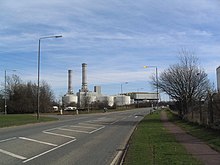
Corby was designated as a new town in 1950. Most of the housing in the town has been built since this date. The first new street completed was Bessemer Grove, about the same time that the re-built blast furnace was lit.[15] New industry was subsequently attracted to the town when the Thatcher government designated it as an Enterprise Zone. By 1991 unemployment had returned to the national average.[16] The recovery of Corby was explained in 1990 by John Redwood, then a junior minister in the Department of Trade and Industry, as being a result of the establishment of the Enterprise Zone, the promotion of Corby by the Thatcher government, the work of private investors and the skills of the work force. Others believe the town's recovery was significantly assisted by its central location and substantial grants from the EU.[17][18] The enterprise zone was promoted by the Corby Industrial Development Centre through a prospectus that parodied The Economist, titled The Ecorbyist;[19][20] publication continued at least as late as 1994.[21]
To the north of Corby, on the industrial estates, is a 350MW power station built in 1994; and the Rockingham Motor Speedway built in 2001.
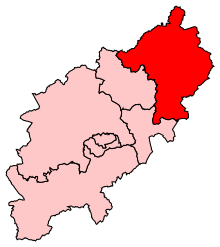
From 1894 until 1939 Corby was a parish in Kettering Rural District, in 1939 Corby became an urban district, on 1 April 1974 the urban district and parish were abolished and Corby became an unparished area in Corby non-metropolitan district.[22][23][24]
The Corby constituency contains parts of traditionally Conservative East Northamptonshire that balance the traditionally Labour town of Corby, leading to a marginal constituency that has gone to the party forming the UK Government at every general election since the creation of the constituency in 1983.
From 1983 to 1997 the seat was narrowly held for the Conservatives by William Powell. Phil Hope then won the seat for Labour and held it until 2010 when he lost to the writer Louise Bagshawe, the Conservative Party candidate, who became Louise Mensch after her marriage the following year.
In 2012, Mensch resigned as an MP and the resulting by-election was won by Labour's Andy Sawford with a majority of 7,791 votes over the Conservatives. UKIP finished in third place whilst the Liberal Democrats finished in fourth place, losing their deposit. The by-election was of national and international media interest due to the constituency being a marginal seat. During the wait for the results announcement, "Corby" briefly trended worldwide on Twitter.
Tom Pursglove regained the seat for the Conservatives in the 2015 general election, outpolling Sawford by a majority of 2,412. Pursglove retained the seat in 2017 with a majority of 2,690 [25] and then by 10,268 in 2019, [25] ahead of Labour candidate Beth Miller on both occasions. Following slight boundary changes, and with the seat now officially referred to as Corby and East Northamptonshire, the 2024 general election saw Pursglove lose the seat to Labour's Lee Barron whose majority was 6,331. [26]
In the 2016 referendum on the UK's membership of the European Union, Corby voted 64% in favour of leaving whilst only 36% voted to remain in the EU. The turnout was 74.1% with the leave vote winning with a majority of 9,141 votes.[27] The constituency's MP at the time, Tom Pursglove, had also been in favour of the UK leaving the European Union being one of the founders of Grassroots Out, the pro-Brexit organisation largely supported by Conservative and UKIP politicians.[28]
Between 1979 and its abolition in 2021, Corby Borough Council was controlled by the Labour Party. [29]
On 8 December 2014, Northamptonshire Police began an investigation into financial dealings by Corby Borough Council. In July 2013, Conservative councillors Rob McKellar and David Sims handed the "suspicious" findings of an audit report to the police to see if a crime had been committed. The audit report examined four major projects, including the Corby Cube, the cost of which went from £35m to £47m.[30] It was reported in 2016 that the investigation had concluded and no prosecutions would be brought. [31]
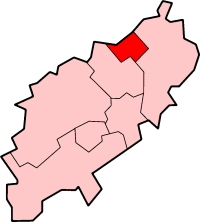
In March 2018, following Northamptonshire County Council becoming insolvent, due to financial and cultural mismanagement by the cabinet and officers, the then Secretary of State for Local Government, Sajid Javid, sent commissioner Max Caller into the council, who recommended the county council and all district and borough councils in the county be abolished, and replaced by two unitary authorities, one covering the West, and one the North of the county.[32] These proposals were approved in April 2019. It meant that the districts of Daventry, Northampton and South Northamptonshire were merged to form a new unitary authority called West Northamptonshire, whilst the second unitary authority North Northamptonshire consists of the former Corby, East Northamptonshire, Kettering and Wellingborough districts. These new authorities came into being on 1 April 2021.[33] Elections for the new authorities were due to be held on 7 May 2020, but were delayed due to the COVID-19 pandemic,[34] and were instead held on 6 May 2021. On 1 April 2021 a civil parish called Corby Town was formed.[35][36] On 1 January 2024 the parish was renamed to "Corby".[37]
In the local elections of 6 May 2021, for North Northamptonshire Council Corby returned 12 Labour Councillors and 3 Conservative Councillors across 5 wards, with the Conservatives only being elected in the Corby Rural Ward. The newly created Corby Town Council returned 17 Labour Councillors across 4 Wards. In 2022, Corby Town Councillor Tafadzwa Chikoto became the first black mayor of Corby, [38] and in 2023 Leanne Buckingham became the town's first openly lesbian mayor.[39]
In 2012, Corby bid to gain city status as part of Queen Elizabeth II's Diamond Jubilee celebrations.[40] However, it lost out to Perth, Chelmsford and St Asaph.
![[icon]](http://upload.wikimedia.org/wikipedia/commons/thumb/1/1c/Wiki_letter_w_cropped.svg/20px-Wiki_letter_w_cropped.svg.png) |
This section needs expansion. You can help by adding to it. (October 2009)
|
It is recorded in 1851 that the accent spoken in the northern parts of Northamptonshire would be more recognisable as a "West Country dialect".[41] Scottish migration to Corby has created a unique population in the borough. The link with Scotland is a strong feature of the area: according to the 2001 Census, there were 10,063 Scottish-born in the Corby Urban Area – 18.9% of the population. A further 1.3 per cent were born in Northern Ireland. It has been estimated that a further third of the population are Scottish or of Scottish descent.[42]


The Scottish heritage is cherished by many inhabitants. There are Scottish social and sporting clubs and there are many fervent supporters of the Rangers and Celtic football clubs (indeed, Corby was home to the largest Rangers Supporters' Club outside Glasgow and Northern Ireland until its closure in February 2013[43]) as well as the Scottish National Team. Many shops sell Scottish foods and a supermarket even introduced Gaelic signs[44] to their Corby store (but they have since removed them). An annual Highland Gathering featuring traditional Scottish sports, music and dancing is held in the town. Corby has one Church of Scotland congregation [1] Local legend states that Corby sees the highest sales of the Scottish soft drink Irn-Bru of anywhere outside Scotland. Asda Corby is stated to sell 17 times more Irn-Bru than any other store in England.[45][46][47] Its popularity is cemented by the fact that it is available for purchase in all bars, nightclubs and pubs in the area. In 2014, Corby held a mock referendum in the run up to the Scottish independence referendum. 576 votes were cast, with 162 voting for Scottish independence and 414 voting against.[48]
According to the 2001 Census 1.7% of the population are non-white and the average age of the population (37.2) is slightly lower than the average for England and Wales (38.6).[49]
November 2010 saw the opening of the Corby Cube, a major development in the town centre. As well as new council chamber, registrar office, and public library, the Cube is home to a 450-seat theatre and 100 capacity studio theatre. A programme of live theatre, dance, music and standup comedy is complemented by a participation programme encouraging all parts of Corby community to get involved. Recently the theatre started screening films, twice a week and including current mainstream releases and the best in world, independent and art house cinema.[50] A report in 2012 revealed that the Cube was built with dangerous design flaws and almost double its original estimated costs and a capacity of only half of what was planned.[51]

A crater on Mars discovered in the late 1970s was named after Corby, in reference to a famous transcript of a conversation in June 1969 between the crew of the Apollo 11 mission and mission control, whereby world news was relayed to the crew, amongst it was the news that "in Corby, an Irishman named John Coyle won the World's Porridge Eating Championship by consuming 23 bowls of instant oatmeal in 10 minutes". The reply from Apollo 11: "I'd like to enter Aldrin in the porridge eating contest next time; he's on the 19th bowl. Roger."
Local news and television programmes is provided by BBC East and ITV Anglia. Television signals are received from the Sandy Heath TV transmitter, BBC East Midlands and ITV Central can also be received from the Waltham TV transmitter.
The town’s local radio stations are BBC Radio Northampton on 103.6 FM, Heart East on 96.6 FM, Smooth East Midlands (formerly Connect FM) on 107.4 FM and Corby Radio on 96.3 FM, a community radio station.
Corby’s local newspaper is the Northamptonshire Evening Telegraph.
Corby is home to Adrenaline Alley which is one of Europe's largest urban sports venues.[52] Members of Team GB have trained there ahead of competing in the Olympic Games. [53]
Corby Town F.C. play home games at Steel Park in the town. As of 2024/25 "The Steelmen" play in the Northern Premier League Division One Midlands. The club also has women’s, youth and walking football sides who play at county level.[54]
Other football clubs from Corby field sides in the Northamptonshire Combination Football League. Corby has football, rugby union[55] cricket[56] and bowls clubs which are named after the original owners of the town’s former steelworks, Stewarts & Lloyds.
Corby is also home to the Corby East Midlands International Swimming Pool, which opened in 2009, which in turn hosts the town's amateur swimming club.[57]
Corby Athletic Club are based at the Rockingham Triangle Stadium,[58] which was also a former home of Corby Town F.C. The town also has a Tennis Centre[59] and clubs for Table Tennis[60] and various combat sports. A parkrun is held by volunteers on a weekly basis at West Glebe Park. [61]
Public facilities at Lodge Park Sports Centre and Priors Hall Golf Course are overseen by North Northamptonshire Council.[62]
The town is located along the A43, A427, A6003 and is 6 miles (9.7 km) from the A14 at Kettering. Corby lies within two hours' drive of four international airports: Birmingham, Luton, Stansted and East Midlands. Being a new town, Corby's road network is different from that of older towns. There are several dual carriageways, most of the principal roads have wide reservations and high speed limits and pedestrian crossings over them are often underpasses. However, Corby is only connected by dual carriageway to one neighbouring town, Kettering (the A6003). All other roads into the town are single carriageways. The three dual carriageways form an outer ring road around most of Corby,[63] however it only encircles suburbs south of the town centre and a small amount of countryside.

Corby is served by six bus routes under the Corby Star brand name.[64] Route X4 connects the town with Peterborough, Oundle, Weldon, Danesholme, Kettering, Isham, Wellingborough, Earls Barton, Northampton, It is also operated by Stagecoach Midlands.[65] National Express coaches also provide long-distance connections to the north and Scotland. Plans to build a new bus station in Corby are being considered by the council following the closure of the old bus station in August 2002.

Following a number of years when the town had no railway station, a new facility opened on 23 February 2009.[66] East Midlands Railway runs half-hourly services to London St Pancras via Kettering and Wellingborough. The route to London was converted to electric traction in May 2021.[67] There is also a limited peak time service running north to Oakham, Melton Mowbray, East Midlands Parkway and Derby.[68]

Since the 1980s the unemployment rate has returned to a level closer to the national average (2.7% in October 2005).[69] Employment is biased towards manufacturing (36.8% compared with a regional average of 18.5%) and against public administration, health and education (10.0% compared with the regional average of 25.9%).[70] Much of industry is concentrated in purpose-built industrial estates on the outskirts of the town. Fairline Boats were manufactured here. Weetabix Limited make Weetos in the north of the town. RS Components are based near Rockingham Speedway. Taste Original (formerly Puredrive), part of Zwanenberg Food Group UK has operated from Corby since 1988 making cooked meat snacking products. Amy's Kitchen has recently opened a factory here, and manufactured products for the UK market here.
2018 research by Sky News identified Corby as the town most threatened by job losses in the UK due to automation with 31% of employment subject to cliff-edge automation.[71]
According to the 2001 Census the proportion of the working age population with degree-level qualifications (8.5%) is the lowest of all areas in England and Wales. 39.3% have no GCSE-equivalent qualifications at all.[72] The borough of Corby has the highest rate of teenage pregnancy in the East Midlands, outside of the metropolitan boroughs (unitary authorities), although Lincoln is very similar.
According to the 2011 census, Corby had a population of 61,255 and was 85.0% White British, 9.1% Other White (not including White Irish and Irish Traveller), 1.4% mixed race, 1.4% Asian and 1.7% Black.[73] Corby's least White British ward is Oakley Vale where 70.7% of the population are White British while Corby's least ethnically diverse ward is Rural West, where 95.6% of the population are White British.[73] In 2011, 5567 people registered their ethnicity as 'Other White' or 9.1% of the population. This figure includes a large community of people from Poland and the Baltic States.

The Corby campus of Tresham Institute of Further and Higher Education provides a range of vocational courses for post-16 students and adult learners. The nearest universities are the University of Northampton, 23 mi (37 km) to the south and both the University of Leicester and De Montfort University in Leicester, 25 mi (40 km) to the west.
Brooke Weston Academy, was one of only fifteen CTCs in England, opened in 1990. Brooke Weston CTC consistently achieved examination results in the top 5% of English state schools, and has been a City Academy since September 2008.[74]

Since 1990 several of Corby's other secondary schools have fared less well with a series of poor examination results and critical inspection reports leading to mergers and closures, the most recent being the closure of Our Lady and Pope John School in 2005. Currently there are five secondary schools in Corby: Brooke Weston Academy, Lodge Park Academy, Corby Business Academy, Kingswood Secondary Academy and the newly opened Corby Technical School which opened to students in an old unused primary school in September 2012 with the new building completed and opened in November 2013. Corby Business Academy has a special unit for children with severe special educational needs. All four schools have sixth forms for post-16 students.
Corby has 17 primary schools, of which two are Church of England schools, three are Roman Catholic and one for children with severe behavioural and emotional difficulties.
Corby has an Urban Regeneration Company – North Northants Development Company, which now covers the whole of North Northamptonshire rather than just Corby (it was previously known as Catalyst Corby). The company is working closely with Corby Borough Council, Land Securities (town centre owners), the East Midlands Development Agency and the Homes and Communities Agency to regenerate the town centre as part of the masterplan for the whole town. The population of Corby town is expected to double in the next 30 years through housing on large estates such as Prior's Hall, Little Stanion, Oakley Vale and Great Oakley.
In October 2007 Corby's new shopping precinct, Willow Place, opened.[75] In addition Parkland Gateway, the Borough's £50m investment situated adjacent to Willow Place and including a new Olympic-sized swimming pool and civic hub (due for completion in November 2010), is being built following its approval in January 2007. Work began on the project in October 2007 and the Corby East Midlands International Pool was officially opened by Olympian Mark Foster in July 2009. Although the Evolution Corby project is currently on hold, limited aesthetic augmentation work within the town centre continues.
"The Saxon Crown", a Wetherspoon pub and hotel in Corby town centre is a refurbished 1960s Cooperative store. Its name refers to the history of the area: the village of Corby derives its name from Kori, a leader of Danish invaders who settled in a clearing in Rockingham Forest.[76]
The local Conservative Party have argued that further regeneration in Corby should be delivered through bringing visitors to the town to visit its numerous historic sites. They argue that a co-ordinated tourism programme will increase and diversify the population available for the leisure industry to market to, and thus result in more local leisure facilities being opened.
Stephen Fry voiced an advertising campaign in London from 2010 to entice people to move to Corby and the surrounding area including Rushden, Kettering and Wellingborough. The North Northamptonshire Development Corporation's[77] campaign uses newspaper and London Underground advertisements, and also local radio with North Northamptonshire, being dubbed 'North Londonshire',[78] as the area is only an hour from London St Pancras by rail. The campaign was criticised by residents in the county proud of the Northamptonshire name.[79][80]
In July 2009 Corby Borough Council was found liable for negligently exposing pregnant women to toxic waste during the reclamation of the former British Steel Corporation steelworks, causing birth defects to their children.[81] The judge found in favour of 16 of the 18 claimants, the oldest of whom was 22 at the time of the ruling. The ruling was significant as it was the first in the world to find that airborne pollution could cause such birth defects
|
||||||||||||||||
Corby is 72 miles (116 km) north-northwest of London, 23 miles (37 km) north east of Northampton, 28 miles (45 km) southeast of Leicester, 51 miles (82 km) east of Birmingham and 19 miles (31 km) west of Peterborough, its nearest city.
The built up area of Corby had a population of 56,810[82] in 2011 compared with 61,255 for the Borough of Corby. The urban area had an area of 20.5 km2 compared with 80.3 km2 for the larger borough. Corby is expanding rapidly, with the borough having a population of 53,400 in 2001 and increasing to 61,300 in 2011.[83] The expansion has resulted in villages like Great Oakley and Weldon being absorbed into the town's urban area.[82] However, the latter remains a parish, being separated from the rest of Corby by the A43.
Most of Corby's population live in the town itself, however in terms of area it is mostly rural. This list includes the villages within the borough but also districts of the urban area and modern housing developments. The borough of Corby is made up of 11 wards[84] following a boundary change after the 2011 census.
Corby is twinned with:
|
The song Steeltown by Big Country (title track of the album) was written about the town of Corby, telling how many Scots went to work there, but who found themselves unemployed when the steelworks declined. (Source: Melody Maker, 1984)


 Corby travel guide from Wikivoyage
|
Authority control databases
|
|
|---|---|
| International |
|
| National |
|
| Geographic |
|
 |
The examples and perspective in this article may not represent a worldwide view of the subject. (November 2011)
|
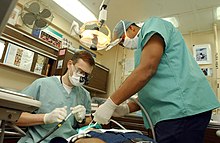
A dentist (seated) treating a patient with the help of an assistant (standing)
|
|
| Description | |
|---|---|
| Competencies | Biomedical knowledge, surgical dexterity, critical thinking, analytical skills, professionalism, management skills, and communication |
|
Education required
|
|
A dentist, also known as a dental surgeon, is a health care professional who specializes in dentistry, the branch of medicine focused on the teeth, gums, and mouth. The dentist's supporting team aids in providing oral health services. The dental team includes dental assistants, dental hygienists, dental technicians, and sometimes dental therapists.
In China as well as France, the first people to perform dentistry were barbers. They have been categorized into 2 distinct groups: guild of barbers and lay barbers. The first group, the Guild of Barbers, was created to distinguish more educated and qualified dental surgeons from lay barbers. Guild barbers were trained to do complex surgeries. The second group, the lay barbers, were qualified to perform regular hygienic services such as shaving and tooth extraction as well as basic surgery. However, in 1400, France made decrees prohibiting lay barbers from practicing all types of surgery. In Germany as well as France from 1530 to 1575 publications completely devoted to dentistry were being published. Ambroise Paré, often known as the Father of Surgery, published his own work about the proper maintenance and treatment of teeth. Ambroise Paré was a French barber surgeon who performed dental care for multiple French monarchs. He is often credited with having raised the status of barber surgeons.[1][2]

Pierre Fauchard of France is often referred to as the "father of modern dentistry" because in 1728 he was the first to publish a scientific textbook on the techniques and practices of dentistry.[3] Over time, trained dentists immigrated from Europe to the Americas to practice dentistry, and by 1760, America had its own native born practicing dentists. Newspapers were used at the time to advertise and promote dental services. In America from 1768 to 1770 the first application of dentistry to verify forensic cases was being pioneered; this was called forensic dentistry. With the rise of dentists, there was also the rise of new methods to improve the quality of dentistry. These new methods included the spinning wheel to rotate a drill and chairs made specifically for dental patients.[4]
In the 1840s, the world's first dental school and national dental organization were established. Along with the first dental school came the establishment of the Doctor of Dental Surgery degree, often referred to as a DDS degree. In response to the rise in new dentists as well as dentistry techniques, the first dental practice act was established to regulate dentistry. In the United States, the First Dental Practice Act required dentists to pass each specific state medical board exam in order to practice dentistry in that particular state. However, because the dental act was rarely enforced, some dentists did not obey the act. From 1846 to 1855, new dental techniques were being invented such as the use of ester anesthesia for surgery, and the cohesive gold foil method which enabled gold to be applied to a cavity. The American Dental Association was established in 1859 after a meeting with 26 dentists. Around 1867, the first university-associated dental school was established, Harvard Dental School. Lucy Hobbs Taylor was the first woman to earn a dental degree.
In the 1880s, tube toothpaste was created which replaced the original forms of powder or liquid toothpaste. New dental boards, such as the National Association of Dental Examiners, were created to establish standards and uniformity among dentists.[4] In 1887, the first dental laboratory was established; dental laboratories are used to create dentures and crowns that are specific to each patient.[5] In 1895, the dental X-ray was discovered by a German physicist, Wilhelm Röntgen.[6]
In the 20th century, new dental techniques and technology were invented such as the porcelain crowns (1903), Novocain (a local anesthetic) 1905, precision cast fillings (1907), nylon toothbrushes (1938), water fluoridation (1945), fluoride toothpaste (1950), air driven dental tools (1957), lasers (1960), electric toothbrushes (1960), and home tooth bleaching kits (1989) were invented. Inventions such as the air driven dental tools ushered in a new high-speed dentistry.[4][7]
By nature of their general training, a licensed dentist can carry out most dental treatments such as restorative (dental restorations, crowns, bridges), orthodontics (braces), prosthodontic (dentures, crown/bridge), endodontic (root canal) therapy, periodontal (gum) therapy, and oral surgery (extraction of teeth), as well as performing examinations, taking radiographs (x-rays) and diagnosis. Additionally, dentists can further engage in oral surgery procedures such as dental implant placement. Dentists can also prescribe medications such as antibiotics, fluorides, pain killers, local anesthetics, sedatives/hypnotics and any other medications that serve in the treatment of the various conditions that arise in the head and neck.
All DDS and DMD degree holders are legally qualified to perform a number of more complex procedures such as gingival grafts, bone grafting, sinus lifts, and implants, as well as a range of more invasive oral and maxillofacial surgery procedures, though many choose to pursue residencies or other post-doctoral education to augment their abilities. A few select procedures, such as the administration of General anesthesia, legally require postdoctoral training in the US. While many oral diseases are unique and self-limiting, poor conditions in the oral cavity can lead to poor general health and vice versa; notably, there is a significant link between periodontal, cardiovascular, and endocrine diseases.[8][9] Conditions in the oral cavity may also be indicative of other systemic diseases such as osteoporosis, diabetes, AIDS, and various blood diseases, including malignancies and lymphoma. Dentists can also prescribe medicines.[10]
Several studies have suggested that dentists and dental students are at high risk of burnout. During burnout, dentists experience exhaustion, alienate from work and perform less efficiently.[11] [12] A systemic study identified risk factors associated with this condition such as practitioner's young age, personality type, gender, the status of education, high job strain, working hours, and the burden of clinical degrees requisites. The authors of this study concluded that intervention programs at an early stage during the undergraduate level may provide practitioners with a good strategy to prepare for and cope with this condition.[13]
Depending on the country, all dentists are required to register with their national or local health board, regulators, and professional indemnity insurance, in order to practice dentistry. In the UK, dentists are required to register with the General Dental Council. In Australia, it is the Dental Board of Australia, while in the United States, dentists are registered according to the individual state board. The main role of a dental regulator is to protect the public by ensuring only qualified dental practitioners are registered, handle any complaints or misconduct, and develop national guidelines and standards for dental practitioners to follow.[14]
For many countries, after satisfactory completion of post-graduate training, dental specialists are required to join a specialist board or list, in order to use the title 'specialist'.
In the US, dental specialties are recognized by the American Dental Association (ADA) or the American Board of Dental Specialties (ABDS)[15] Currently, the ADA lists twelve dental specialties, who are recognized by the National Commission on Recognition of Dental Specialties and Certifying Boards,[16] while the ABDS recognizes four dental specialty boards.[17]
List of Dental Specialties under the ADA:[16]
List of Dental Specialties under the ABDS:[17]
Specialists in these fields are designated "registrable" (in the United States, "board eligible") and warrant exclusive titles such as dentist anesthesiologist, orthodontist, oral and maxillofacial surgeon, endodontist, pediatric dentist, periodontist, or prosthodontist upon satisfying certain local accreditation requirements (U.S., "Board Certified")
In the UK, the specialties are recognized by the General Dental Council (GDC). Currently the GDC lists 13 different dental specialties:[19]
European Union legislation recognizes two dental specialties: Oral and Maxillofacial Surgery (A degree in dentistry and medicine being compulsory)[20] and Orthodontics.[citation needed]
|
Authority control databases
|
|
|---|---|
| National |
|
| Other |
|


I cannot recommend Bhav and the team enough. I am a nervous patient that was having old filings removed and replaced with new white ones, composite bonding and 3 implants. The team made me feel at ease every step of the way. Thank you all, I cannot stop showing my new smile off . If you are thinking about it, I would definitely recommend you book an appointment with natural smiles.

Very very helpful so looking forward to the future appointments. Carol was so helpful, and compassionate when describing what treatment going forward would involve. Looking forward to my future appointments

I have been using Natural Smiles for around 13 years now from composite bonding, teeth whitening, a dental implant to check ups and hygiene cleans. I honestly wouldn’t go anywhere else for dental treatment! They are all very friendly and welcoming, appointments run on time and the care received is nothing short of amazing. I absolutely love my teeth and smile and that’s all thanks to Natural Smiles and the team.

2 years ago I needed a tooth implant, the process from start to finish was explained very well, and all went exactly according to plan. And when fitted it was impossible to tell which tooth it was. So 2 years later when I needed another implant, I didn’t hesitate to come straight back to Natural Smiles in Corby. Everything again went exactly according to plan. I’m very happy with both implants, and you can’t tell them apart from the rest of my teeth, they look completely natural. Thank you Natural Smiles Corby.

I personally couldn't have asked for a better experience at Natural Smiles Corby. From receptionists through to the dentists themselves, all absolutely spot on and made what is normally a daunting experience, a very pleasant one. Highly recommended!
Veneers are thin, custom-made shells that cover the front surface of teeth to improve their appearance. We offer high-quality porcelain and composite veneers to correct discoloration, chips, and misalignment.
Composite fillings are tooth-colored restorations used to repair cavities or minor damage. They blend seamlessly with natural teeth and provide a durable, aesthetic solution.
Yes, dental implants are a safe and effective solution for missing teeth. They are made from biocompatible materials and are designed to integrate with your jawbone for long-term stability.
If you have a broken tooth, contact us as soon as possible. Depending on the severity, we may recommend bonding, a crown, or veneers to restore your tooth.


